
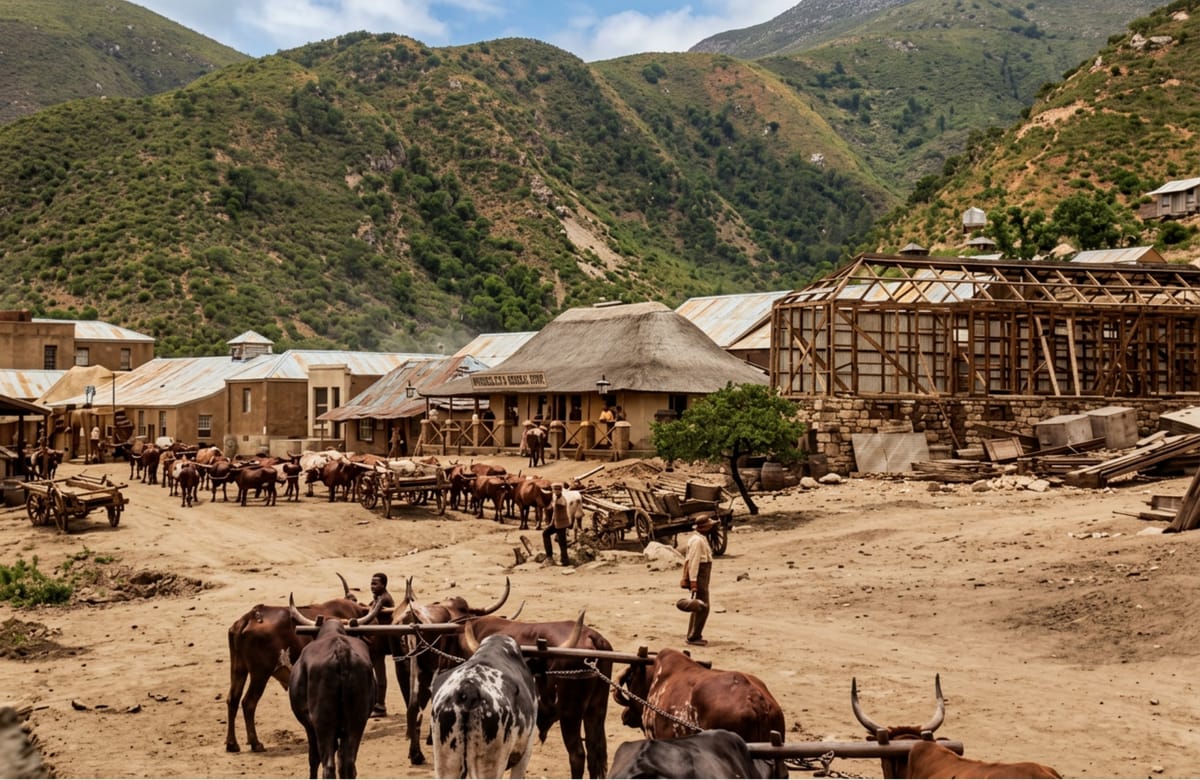
Before railways and proper roads, everything that sustained the De Kaap goldfields arrived by ox-wagon.

Long before tarred roads wound through the mountains and decades before the railway reached Barberton, the survival of the De Kaap goldfields depended on a remarkable group of men, animals and wagons. Every loaf of bread, mining tool, bottle of medicine, sack of flour and piece of machinery that reached the young gold town arrived through the determination of transport riders and their teams of oxen.
Today, motorists can drive into Barberton from Nelspruit, Badplaas or Eswatini in little more than an hour. In the 1880s, however, the journey was an entirely different matter. The De Kaap Valley was isolated by rugged mountains, dense bush and rough tracks that could scarcely be called roads. Yet within a few short years of the discovery of gold in 1884, thousands of people had flooded into the region in search of fortune.
The sudden growth of Barberton created a challenge. The miners needed food. Businesses needed supplies. Mines required machinery and equipment. Everything had to be transported into the valley from distant ports, towns and farming districts. The task fell to the transport riders.
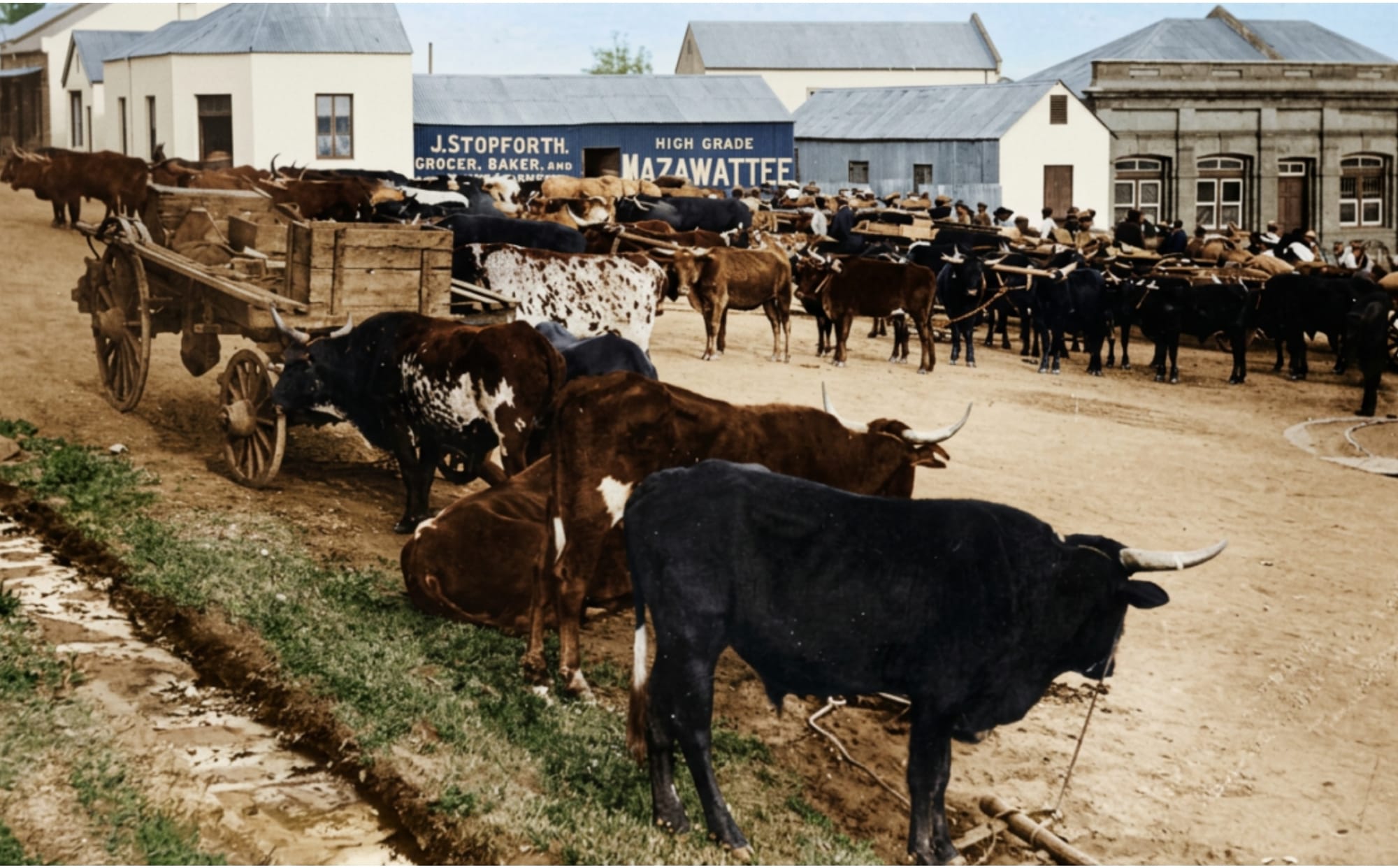
These hardy men were the long-haul truck drivers of their era. Using large wagons drawn by spans of up to twenty oxen, they carried goods over hundreds of kilometres of unforgiving terrain. Their journeys could last weeks or even months. They slept beneath their wagons, endured storms, crossed flooded rivers and navigated tracks that were often little more than wheel ruts through the veld.
The cargoes they transported reflected the needs of a booming frontier town. Mining equipment, building materials, furniture, food, clothing, mail and household goods all made their way to the goldfields on the backs of ox-wagons. As prospectors established camps and settlements throughout the region, transport riders became the vital link between the isolated goldfields and the outside world.
The discovery of gold transformed the De Kaap region almost overnight. Prospectors established camps at places such as Jamestown, Eureka City, Kaapsche Hoop and eventually Barberton itself. As these settlements grew, tracks became transport routes and every route depended on the transport rider. Without them, the gold rush would have stalled before it truly began.
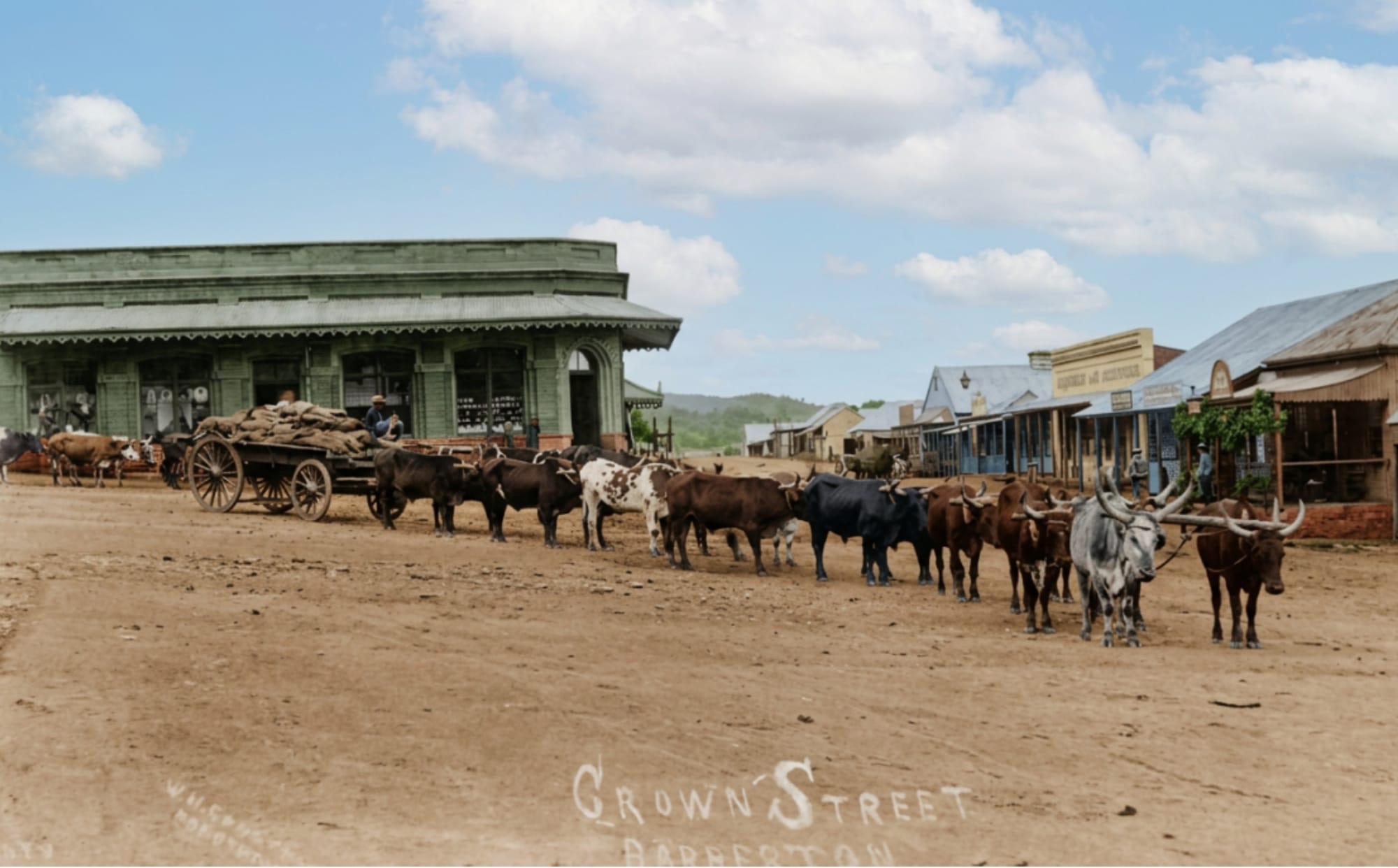
One of the most feared obstacles on the journey into Barberton was a steep mountain descent known simply as the Chute. Located on the old Natal Road, it formed part of the primary supply route linking the coast with the goldfields. The route dropped dramatically down the escarpment into the De Kaap Valley and quickly earned a reputation among transport riders as one of the most dangerous wagon roads in southern Africa.
The Chute tested both men and animals to their limits. Wagons risked running out of control on the steep gradients. Wheels were chained, branches were dragged beneath wagons to act as brakes and loads were sometimes removed and carried separately. Broken wagons littered parts of the route, serving as stark reminders of the dangers that awaited the unwary.
Yet despite these hardships, the wagons kept coming.
Historical accounts suggest that during the height of the gold rush, thousands of wagons passed through the route each month. Their arrival brought life to the growing settlement. Traders stocked their shelves. Hotels filled their storerooms. Bakers received flour. Mines obtained machinery. Every successful journey contributed to the growth of Barberton from a remote mining camp into one of the busiest towns in the South African Republic.
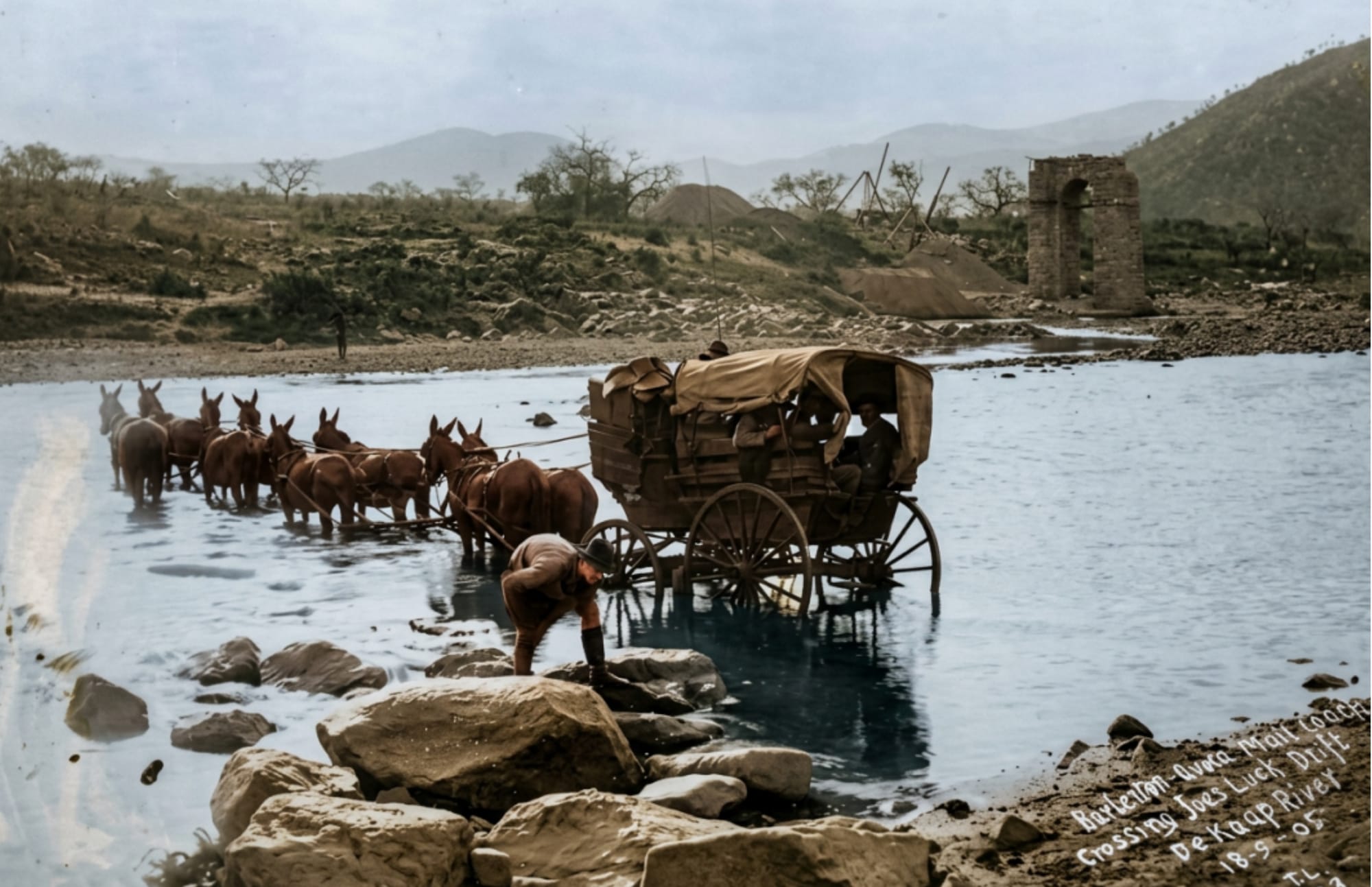
The oxen themselves were remarkable animals. Trained specifically for transport work, they were capable of hauling heavy loads over immense distances. Each animal knew its place in the span and responded to commands from the driver. Their strength, endurance and resilience made long-distance transport possible in a landscape where horses and mules often struggled.
For all the romance associated with the era of the ox-wagon, life on the transport routes was far from easy. Droughts, floods, disease, broken equipment and dangerous terrain were constant companions. Progress could be painfully slow, particularly during the rainy season when wagons became trapped in mud or were delayed at swollen river crossings.
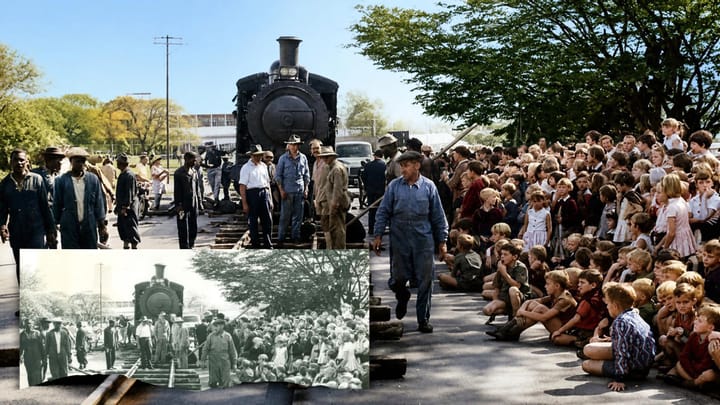
Everything changed with the arrival of improved roads and, eventually, the railway line to Barberton in 1896. What had once taken weeks could now be accomplished in days. The age of the transport rider gradually faded, replaced by faster and more efficient forms of transport.
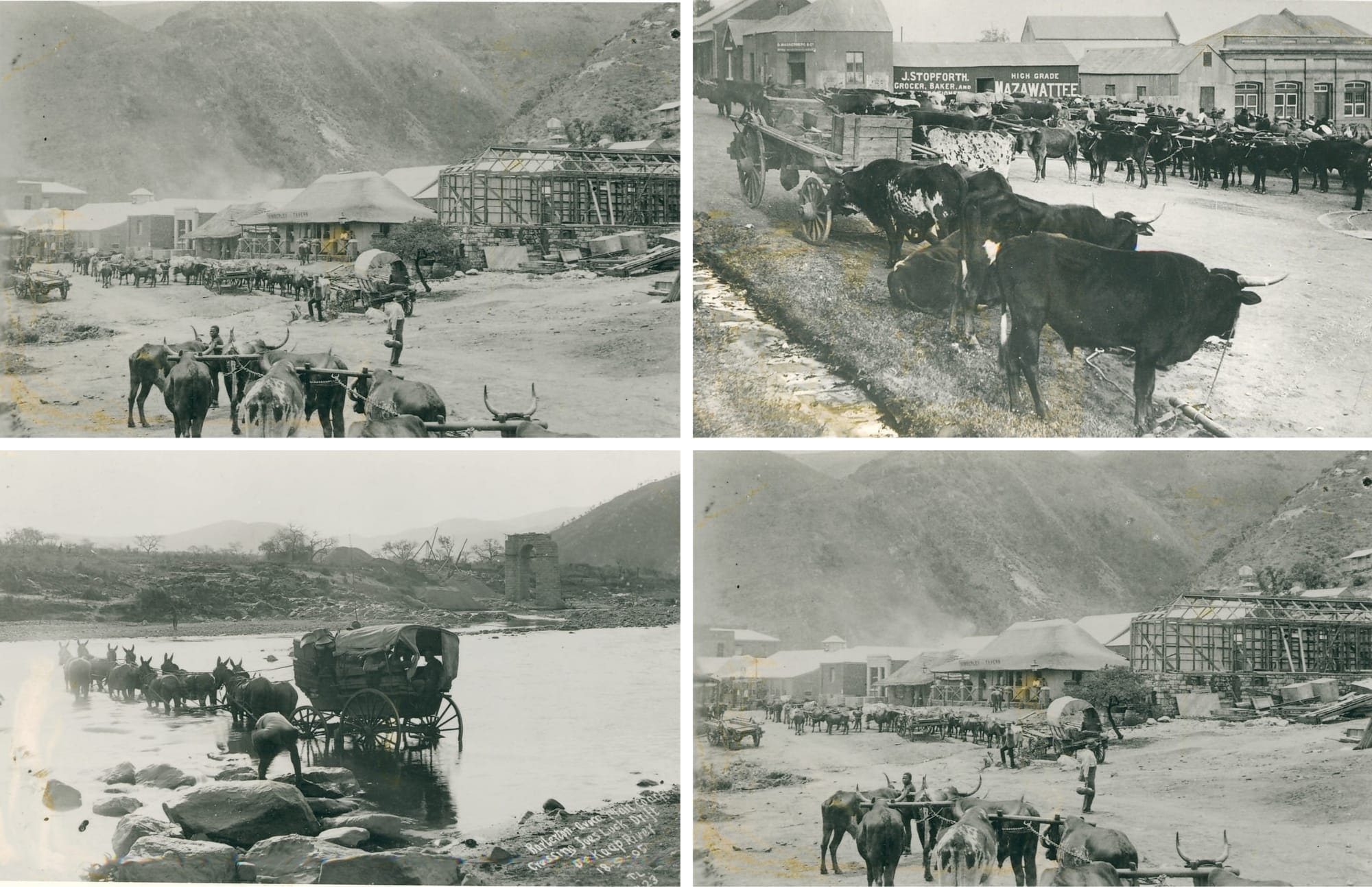
Yet their contribution to the development of the De Kaap Valley should never be forgotten. The story of Barberton's gold rush is often told through the discoveries of prospectors and the fortunes won and lost on the mines. Less often remembered are the transport riders whose wagons creaked through the mountains carrying the supplies that made those dreams possible.
Without the transport riders and their faithful oxen, there would have been no thriving goldfields, no bustling frontier town and perhaps no Barberton as we know it today. They were the lifeline of the De Kaap Valley, connecting a remote corner of the eastern Transvaal to the wider world one wagonload at a time.

 Anchen Coetzee
 Naomi Roebert
 Mariana Balt
 Liz Thorne
Comments ()