
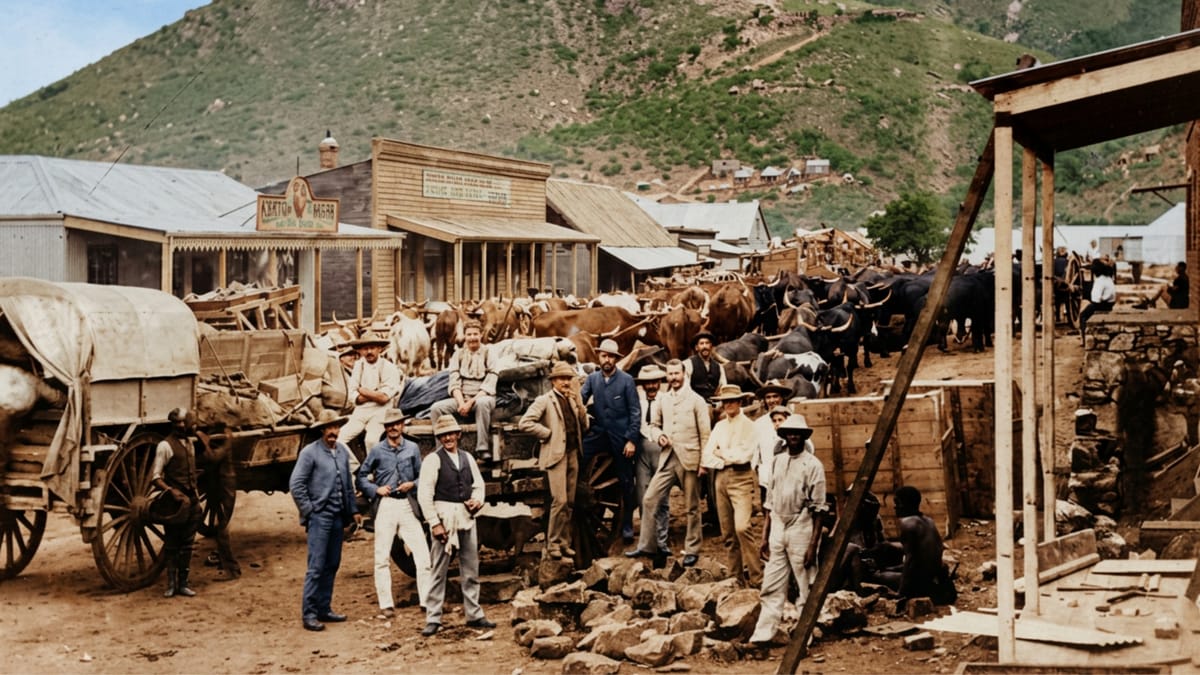
Before Jock of the Bushveld made him famous, Percy FitzPatrick spent years as a transport rider on the rugged wagon roads linking Barberton to the coast.

Today, the name Percy FitzPatrick is inseparable from Jock of the Bushveld, the beloved South African classic that has captivated generations of readers. Visitors to Barberton encounter reminders of both FitzPatrick and his loyal dog Jock, whose adventures have become part of Lowveld folklore. A statue of Jock still stands proudly in front of the municipal building.
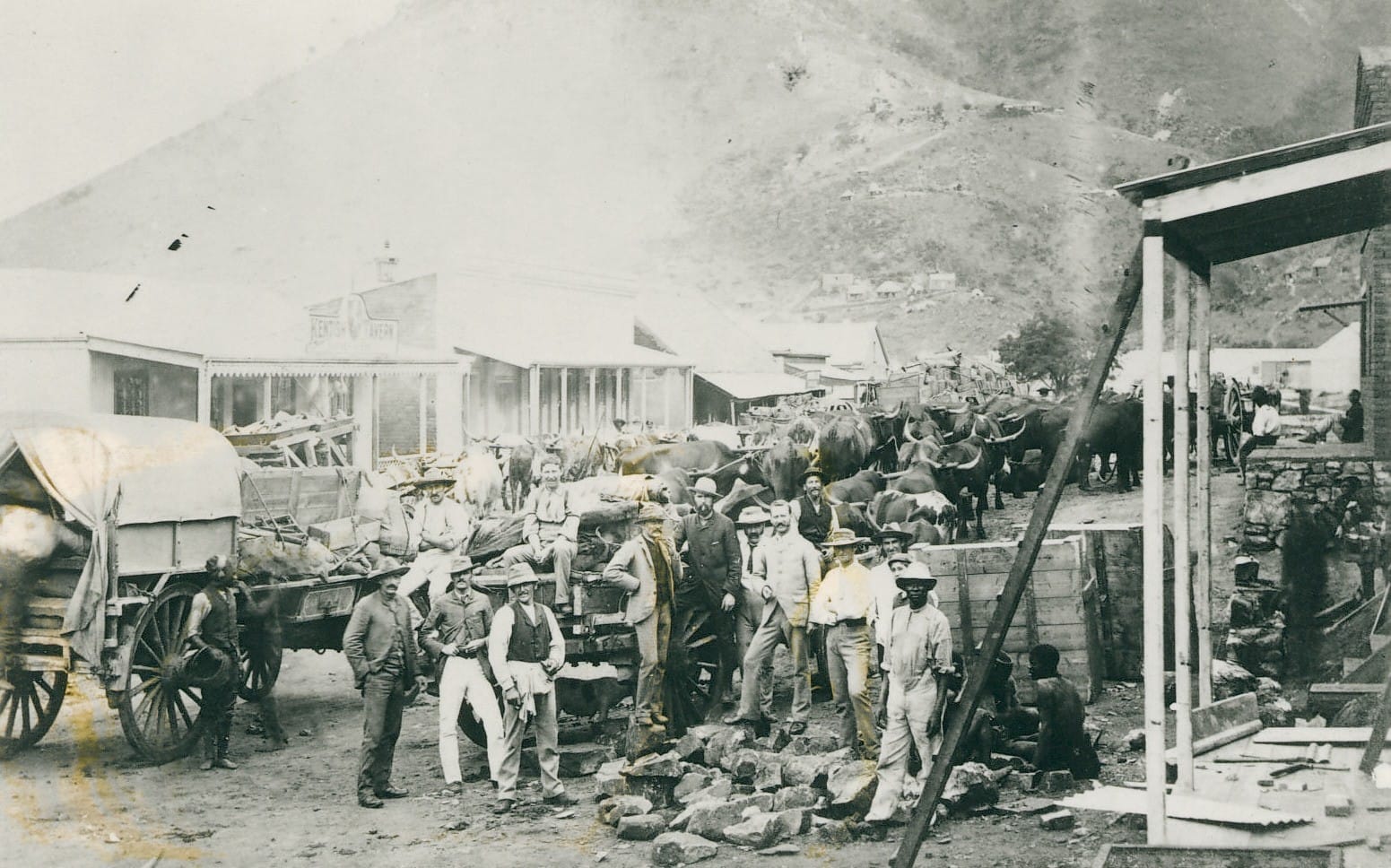
Yet, long before he became a celebrated author, politician and businessman, Percy FitzPatrick was something entirely different. He was a young adventurer navigating the rugged wagon roads of the eastern Transvaal, transporting supplies through a wilderness that tested the courage, endurance and determination of everyone who travelled it.
It was during these formative years, spent on the transport routes that linked the goldfields of Barberton to Delagoa Bay and the wider world, that the foundations of the legend were laid.
Percy FitzPatrick arrived in southern Africa from England as a young man seeking opportunity. Like thousands of others during the 1880s, he was attracted by rumours of gold discoveries in the eastern Transvaal. The discovery of gold in the De Kaap Valley had transformed Barberton almost overnight from a remote wilderness into one of the busiest boom towns in southern Africa.
The gold rush drew prospectors, entrepreneurs, fortune hunters and dreamers from across the globe. Among them was the young FitzPatrick. Like many newcomers, he initially tried his hand at prospecting. Success, however, proved elusive. The goldfields were crowded with hopeful miners, and fortunes were far harder to find than many had imagined.
Rather than return home defeated, FitzPatrick adapted. He recognised that while many men were searching for gold, the rapidly growing settlements needed something even more important: supplies.
In the days before railways reached Barberton, every piece of machinery, every sack of flour, every crate of provisions and every item of equipment had to be brought into the goldfields by wagon. This vital work fell to the transport riders.
The profession demanded toughness, patience and resourcefulness. Transport riders travelled enormous distances with teams of oxen, hauling heavy wagons across mountains, rivers and stretches of untamed bush. Journeys could take weeks and were often plagued by bad weather, mechanical breakdowns, disease and dangerous terrain.
FitzPatrick became one of these transport riders, operating along the routes that connected the goldfields to Delagoa Bay, today's Maputo. The work was demanding, but it offered something prospecting often could not, a reliable income and a front-row seat to one of the most fascinating periods in South African history.
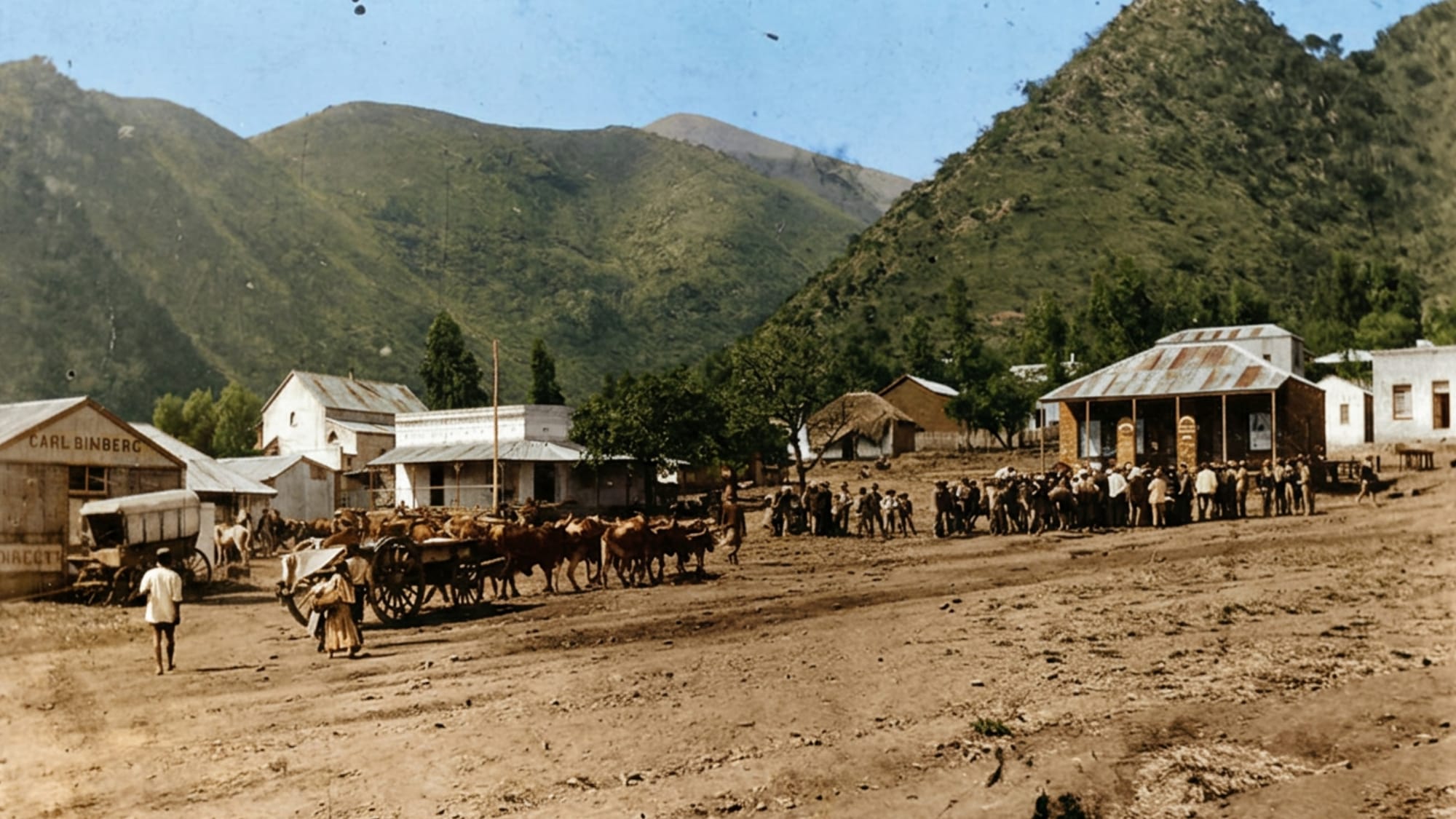
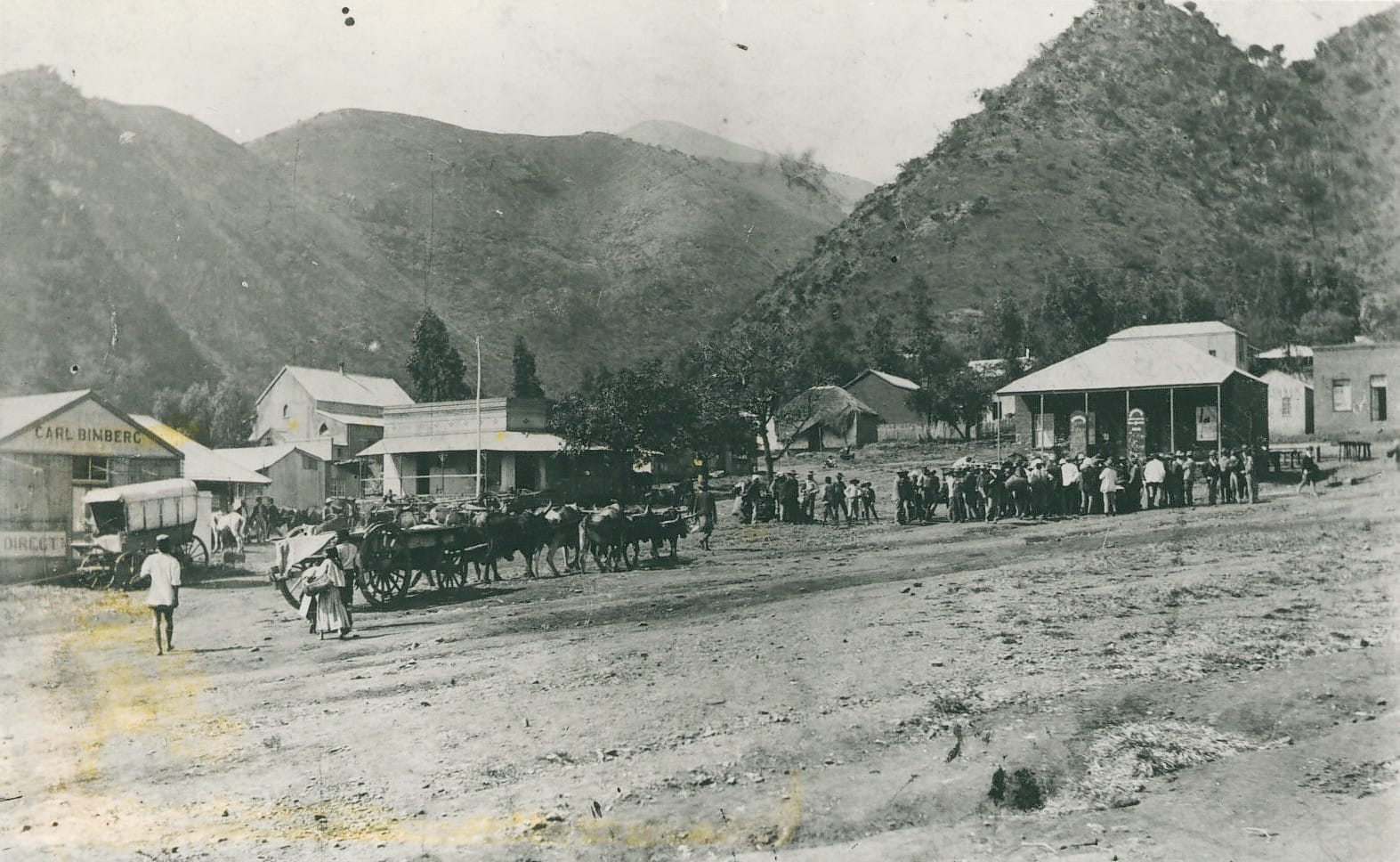
Modern motorists travelling through Mpumalanga may find it difficult to imagine the conditions that existed in the 1880s. The routes used by transport riders were often little more than rough tracks winding through mountains and dense bush. River crossings could become impassable after heavy rains. Steep descents tested both wagons and oxen. Broken wheels, damaged axles and overturned wagons were common hazards.
Among the most notorious routes was the old road descending into the De Kaap Valley. The mountainous terrain surrounding Barberton presented enormous challenges for transport riders attempting to bring supplies into the growing goldfields. Every successful journey required careful planning and no small amount of courage. Yet despite the hardships, wagon trains continued to arrive, carrying the goods that sustained the mines, businesses and residents of the frontier town.
It was during these years on the transport routes that FitzPatrick acquired the dog who would eventually become one of South Africa's most famous literary characters. The story of Jock has become legendary. Given to FitzPatrick as a small puppy, the dog accompanied him on countless journeys through the Lowveld. Together they encountered dangerous wildlife, hostile conditions and numerous adventures that would later provide material for FitzPatrick's writing.
While Jock would eventually become the hero of the story, it is easy to overlook the significance of the world in which those adventures took place. The bushveld through which FitzPatrick travelled was still largely untamed. Lions, leopards, crocodiles and snakes were everyday realities. Malaria posed a constant threat. Long stretches of wilderness separated settlements, and help was often days away.
For transport riders, self-reliance was not simply an admirable quality; it was a necessity. The years spent on the wagon roads gave FitzPatrick an intimate knowledge of the eastern Transvaal. He came to understand the landscapes, wildlife, people and cultures that made the region unique. He met prospectors, traders, farmers, transport riders and indigenous communities whose lives intersected along the routes linking the goldfields to the coast.
Many of the characters, places and incidents that later appeared in Jock of the Bushveld were inspired by people and events FitzPatrick encountered during this period. The book's enduring appeal lies partly in the authenticity of its setting. It was not merely a work of imagination but a reflection of a remarkable chapter in South African history.
FitzPatrick's later achievements often overshadow his years as a transport rider. He became a successful businessman, entered politics and played an influential role in South African public life.
Yet the young man who travelled the wagon roads of the Lowveld remained central to his identity. The challenges he faced, the friendships he forged and the adventures he experienced shaped both the person he became and the stories he would later tell. Without those years in the bushveld, there might never have been a Jock of the Bushveld.
More than a century after the gold rush, Percy FitzPatrick remains one of the most recognisable figures associated with the history of Barberton and the Lowveld. 0000000000000His story is often remembered through the eyes of Jock, but it is worth remembering the young transport rider behind the famous book. Before he became a knight of the British Empire and one of South Africa's best-known authors, he was a determined young man navigating rough wagon roads, crossing swollen rivers and carrying supplies through a frontier landscape.
Those journeys helped sustain the goldfields of the De Kaap Valley, but they also produced something far more enduring: a story that would introduce generations of readers to the beauty, hardships and adventure of the South African bushveld.
In many ways, the tale of Percy FitzPatrick began not with a book, but with a wagon creaking along a dusty Lowveld track and a small dog trotting faithfully at its side.
 Naomi Roebert
 Mariana Balt
 Liz Thorne
Comments ()