
Gold, loss and uncertainty: three mines that shaped the community
While famous names like Sheba and Fairview dominate the town’s early history, three smaller operations, Lily, Barbrook and Makhonjwa mines, played deeply personal role in the lives of generations of local families.
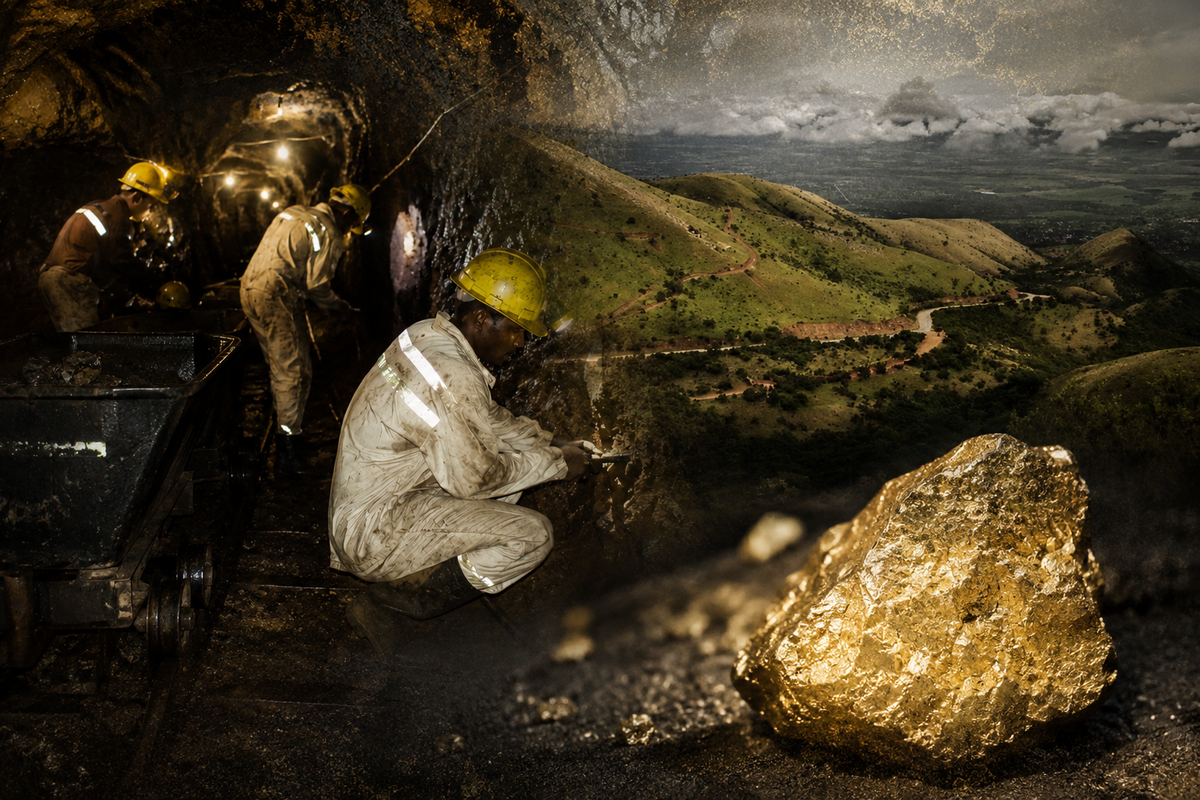
For more than a century, gold mining has shaped the landscape, economy and identity of Barberton and its surrounding settlements. While famous names like Sheba and Fairview dominate the town’s early history, three smaller operations, Lily, Barbrook and Makhonjwa mines, played a quieter but deeply personal role in the lives of generations of local families. Their story is one of opportunity, hardship, tragedy and the lingering uncertainty that still affects the community today.
Situated within the ancient rocks of the Barberton Greenstone Belt, one of the oldest geological formations on Earth, these mines drew their existence from a landscape that has been yielding gold for millions of years. The mountains surrounding Barberton form part of the Barberton Makhonjwa Mountains, a UNESCO World Heritage Site recognised for preserving some of the best-exposed early Earth geology on the planet.
Barbrook: one of the valley’s enduring workings
Barbrook Mine traces its roots back to the earliest phases of the Barberton gold rush in the late 19th century. As prospectors followed quartz reefs through the steep valleys north of Barberton, Barbrook developed into one of several small but productive operations that would open and close repeatedly as gold prices rose and fell.
Over the decades, Barbrook was expanded and reworked by different companies, with new shafts and tunnels driven into old ground. Unlike some of the larger, continuously operating mines in the district, Barbrook’s history was characterised by cycles of abandonment and revival. Each new phase of activity brought jobs, infrastructure and renewed hope to nearby settlements, particularly the communities around Louisville.
By the early 2000s, Barbrook had become the central hub in a cluster of smaller mines sharing processing facilities and management structures. This consolidation reflected a broader trend in South African mining, where historically independent claims were absorbed into larger corporate groupings in an effort to remain economically viable.
Lily Mine: a small operation that became a national symbol
Just a few kilometres from Barbrook, Lily Mine operated as a smaller underground gold mine but held enormous importance for the surrounding community. It provided employment to hundreds of workers and supported families not only in Barberton but also in rural villages across Mpumalanga and neighbouring provinces.
Lily mine originally started out as an open-pit (open-cast) mine in 2000, but its operations evolved and the mine is officially classified as a shallow underground operation. The mine transitioned from an open-pit mine to an underground operation in July 2007.
On February 5, 2016, Lily Mine became the focus of national and international attention when a crown pillar collapse caused a sinkhole at the mine entrance. A surface container used as an office fell into the void, trapping three employees inside. While dozens of underground workers were safely evacuated, the three trapped workers were never recovered.
The tragedy halted operations at Lily Mine and triggered a chain of financial and legal consequences that would soon spread to Barbrook and other associated operations. Families gathered at the mine for weeks, waiting for news that never came, and the site became a place of mourning and unanswered questions.
Makhonjwa Mine: small in size, large in geological significance
Makhonjwa Mine was always the least prominent of the three operations, both in production and public awareness. Located within the same mineralised belt and administrative grouping as Lily and Barbrook, it functioned as a satellite working, tapping into the same ancient gold-bearing structures that run through the region.
Although smaller, Makhonjwa’s name carries enormous scientific significance. The mine lies within the Makhonjwa Mountains, whose rock formations date back more than 3.5 billion years and provide vital evidence about the early development of Earth’s continents and atmosphere.
This juxtaposition, modern mining within some of the oldest rocks on Earth, has long been a defining characteristic of Barberton. The same geological formations that attract scientists from around the world also sustained generations of miners who relied on the gold locked within them.
In the early 21st century, Lily, Barbrook and Makhonjwa were consolidated under a single corporate structure as companies sought to revive smaller, historically mined deposits using modern techniques. This consolidation meant that when one mine struggled, the others were inevitably affected.
After the 2016 collapse at Lily Mine, operations were suspended and the owning company entered business rescue. Barbrook, which had served as an operational and processing hub, was soon drawn into the same financial crisis. Workers who had already endured the trauma of the Lily disaster faced the additional shock of retrenchments and unpaid salaries.
For the town of Louisville and parts of Barberton, the effect was immediate and severe. Shops lost customers, rental properties stood empty and families who had depended on mining income for decades suddenly found themselves without a livelihood.
In the years that followed, there were repeated announcements of potential investors and plans to reopen the mines. Each new proposal brought a surge of hope among former workers and their families. Yet, time and again, negotiations stalled, funding fell through or legal complications delayed progress.
For the families of the three workers who disappeared at Lily Mine, the uncertainty was even more painful. Their loved ones remained entombed underground, and the question of whether their remains would ever be recovered became a deeply emotional issue that extended far beyond Barberton.
Community leaders, trade unions and government officials made several attempts to find solutions, but the technical and financial challenges of safely accessing the collapsed area proved immense. As the years passed, the story of Lily Mine shifted from breaking news to a lingering wound in the community’s collective memory.
The intertwined histories of Lily, Barbrook and Makhonjwa illustrate the broader pattern of mining in Barberton: cycles of discovery, prosperity, decline and renewed attempts at revival. Unlike the large, continuously operating mines that dominate national production figures, smaller operations often exist on the edge of economic viability, leaving both workers and communities vulnerable to sudden changes.
At the same time, these mines provided livelihoods, built roads and supported schools and businesses. Generations of Barberton residents can trace their family histories to shifts spent underground or to wages earned in processing plants and workshops.
Today, the silent headgear and locked gates at Lily and Barbrook stand as reminders of both the wealth that once flowed from these hills and the uncertainty that still surrounds their future. The gold remains in the ground, but the social and economic fabric built around mining has been permanently altered.
There are still periodic discussions about reopening parts of the Barberton mining complex, and the region’s rich geology ensures that interest in its mineral potential will never completely disappear. Yet any future development will have to reckon not only with economic realities but also with the legacy of the past. The tragedy at Lily, the financial struggles at Barbrook and the quiet, overlooked history of smaller workings like Makhonjwa.
For Barberton and Louisville, the story of these three mines is not simply about gold. It is about families, livelihoods and the difficult balance between the promise of mineral wealth and the human cost of extracting it.

Comments ()