
Your vote may not change the world, but silence changes nothing
With municipal elections approaching, many South Africans are asking the same question: does one vote really make a difference?
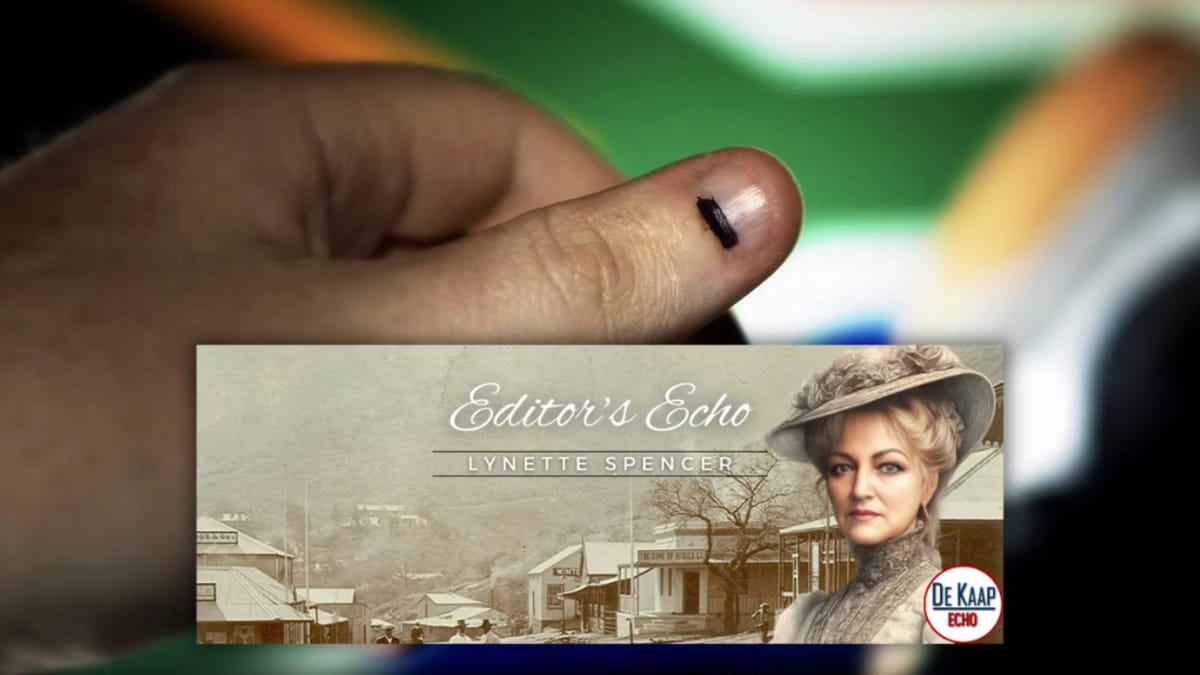
I came across the following message on Facebook, and it made me stop and think:
Dear undecided voters
If there are 10 people on a bus, and 3 vote to drive off a cliff, 2 vote against it, and 5 don't vote at all, you're all going off the cliff.
Your reminder that not voting is literally the dumbest choice.
Ouch! A little dramatic, perhaps, but it certainly makes a point. Every time election season rolls around, I find myself wrestling with the same question: What difference is one little cross on a ballot paper going to make when the country seems to be lurching from one crisis to the next? Even if, by some miracle, the ruling party loses its grip on power, can whoever takes over actually turn this ship around? Or will we simply be exchanging one set of disappointments for another? I suspect I am not alone in asking these questions.
I grew up during the apartheid era. Yes, I know, that statement alone will raise a few eyebrows. And no, I am certainly not suggesting that apartheid was something to celebrate. It was a indeed an unjust system that denied millions of South Africans their basic rights and dignity, but I remember a country in which many of the services and infrastructure people relied on functioned, and in which many families could look forward to a reasonably stable life. That was the reality of my own experience as a child and then a young adult.
I also remember voting in the referendum that paved the way for a democratic South Africa. If only we had been able to peer into the future and see all the twists and turns that lay ahead. Would we have approached that ballot paper differently? History, unfortunately, does not come with a preview button.
Democracy arrived with enormous hope and the promise of a better future for all. There have been real achievements, but decades later, it is difficult not to feel disillusioned when we look at allegations of corruption, failing municipalities, deteriorating infrastructure, services that never arrive and communities left to fend for themselves. Add the racial tensions that continue to rear their ugly heads, and one cannot help wondering how far we have really come in building the country we hoped for.
So, honestly, does my vote make a difference?
During July, we travelled through the Western Cape, and I was struck by what we saw. Roads were generally in good condition, towns were clean, and the places we visited gave the impression of communities where municipal services were functioning. It made me wonder: why can some areas get the basics right while others seem to struggle with the same problems year after year? Does political leadership make a difference? Whatever the answer, seeing things working as they should reminded me that good local government is not some far-fetched fantasy. It is what residents expect.
In Barberton, I have personally seen numerous occasions when ward councillor Philip Minnaar has responded to residents' pleas for assistance on Facebook and he always helped where he could. That is the sort of visible engagement that makes people sit up and take notice. When residents raise concerns, they want someone who listens, responds and tries to get things done. It also raises an important question: can we say the same about every ward councillor?
These are not unreasonable questions. They are precisely the questions we should be asking before casting our votes. A councillor's job does not begin and end with an election campaign, a few promises and a wave from the back of a noisy bakkie. It is an ongoing responsibility to the people who elected them. Now, suddenly, something rather interesting happens in Barberton. Roads that have been riddled with potholes for ages are being repaired. After years of dodging craters that could swallow a small car, motorists are seeing some action. Wonderful! Long may it continue.
But forgive my cynicism when I ask: why now? Why does activity seem to pick up just as another election approaches? Is it coincidence, a long-overdue maintenance programme or the realisation that voters have memories and are tired of being taken for granted? Whatever the reason, residents should welcome improvements while also asking why they took so long. Fixing a road is not a political favour. It is part of the job. Keeping it in good condition should not depend on how close we are to the next election.
Of course, no single party can wave a magic wand and fix every problem overnight. Municipalities face financial pressures, backlogs and complicated challenges. Changing political leadership does not automatically guarantee better service delivery. Any party asking for our votes should be prepared to explain not only what it promises, but how it intends to deliver, how it will manage public funds and how residents will hold it accountable. Promises are easy, but performance is what counts.
So, where does that leave those of us who are tired, sceptical and honestly unsure whether our votes will make any difference? It leaves us with a choice. We can sit at home, shake our heads, complain about potholes, water interruptions, rubbish collection and everything else that frustrates us. We can declare that all politicians are the same and that voting is a waste of time. We can leave the decision to those who do turn up, then spend the next few years complaining about the result.
Or we can get up, weigh up the alternatives and make our mark on the ballot paper. We may not know which party will do the best job. We may have doubts about every option available. We may even feel that we are choosing the least disappointing option rather than the one that fills us with confidence, but that does not make our participation meaningless.
A vote is an opportunity to express our choice, and our elected representatives must continue to earn our trust long after the ballot boxes have been packed away. If we want accountability, we have to participate in the process that puts people in positions of power. We cannot keep handing over our decisions to others and then wonder why things do not change.
So, this November, even if you are as disillusioned as I am, take the time to vote. Look beyond the slogans, the posters and the promises. Ask yourself who has served the community, who has taken responsibility, who has a realistic plan and who is prepared to be held accountable. Remember that your vote belongs to you. Nobody should tell you how to use it. Perhaps one cross will not change the world, but thousands of crosses, cast by people who have decided that their voices still matter, can determine who gets the opportunity to lead.
That Facebook bus analogy might be a little over the top, but it leaves us with an uncomfortable question: if we can see the bus heading in the wrong direction, why would we choose not to have a say in where it goes? Complaining is our right. Voting is our opportunity and accountability is our responsibility.
Let's not surrender that opportunity simply because we have lost faith in those who are supposed to serve us.
𝓛𝔂𝓷𝓮𝓽𝓽𝓮.

Comments ()