
📽️ The mountain that nearly claimed his life welcomed him home again
Eight years after a devastating paragliding accident in Barberton left him fighting for his life, Kelvin van Baalen returned to the very mountain where everything changed. His remarkable journey is not simply one of recovery, but of discipline, humility and finding the courage to fly again.
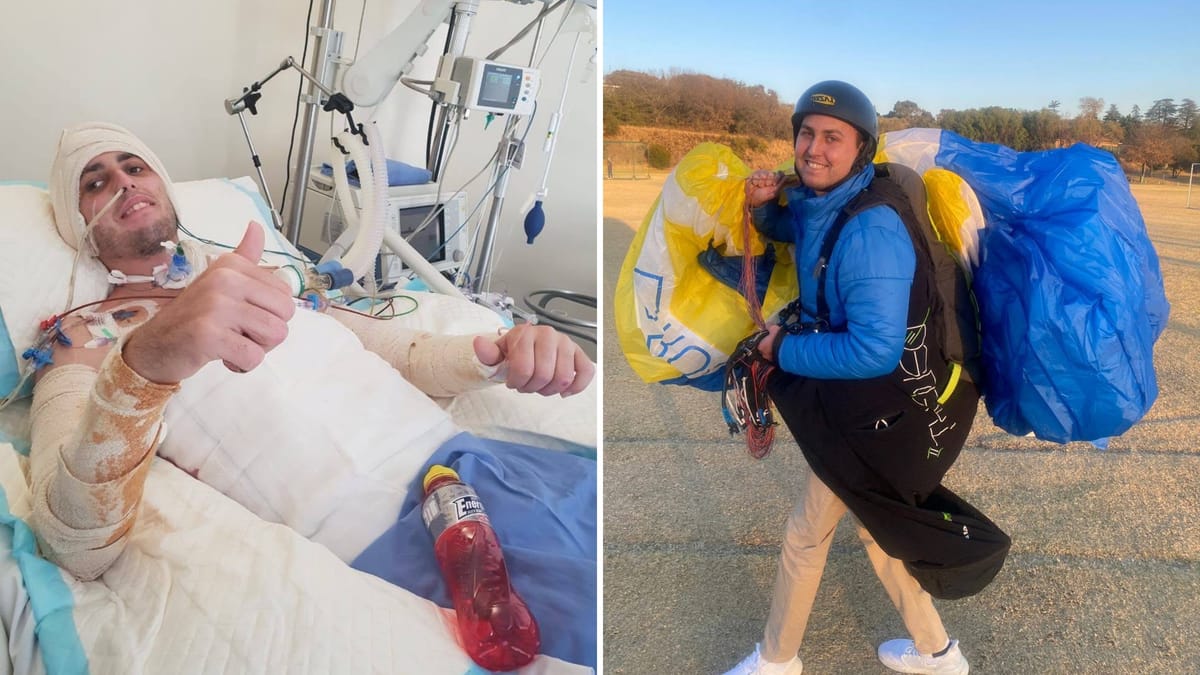


Eight years ago, a young paraglider launched into the skies above Barberton, full of confidence and chasing another competitive flight. Minutes later, his life would change forever.
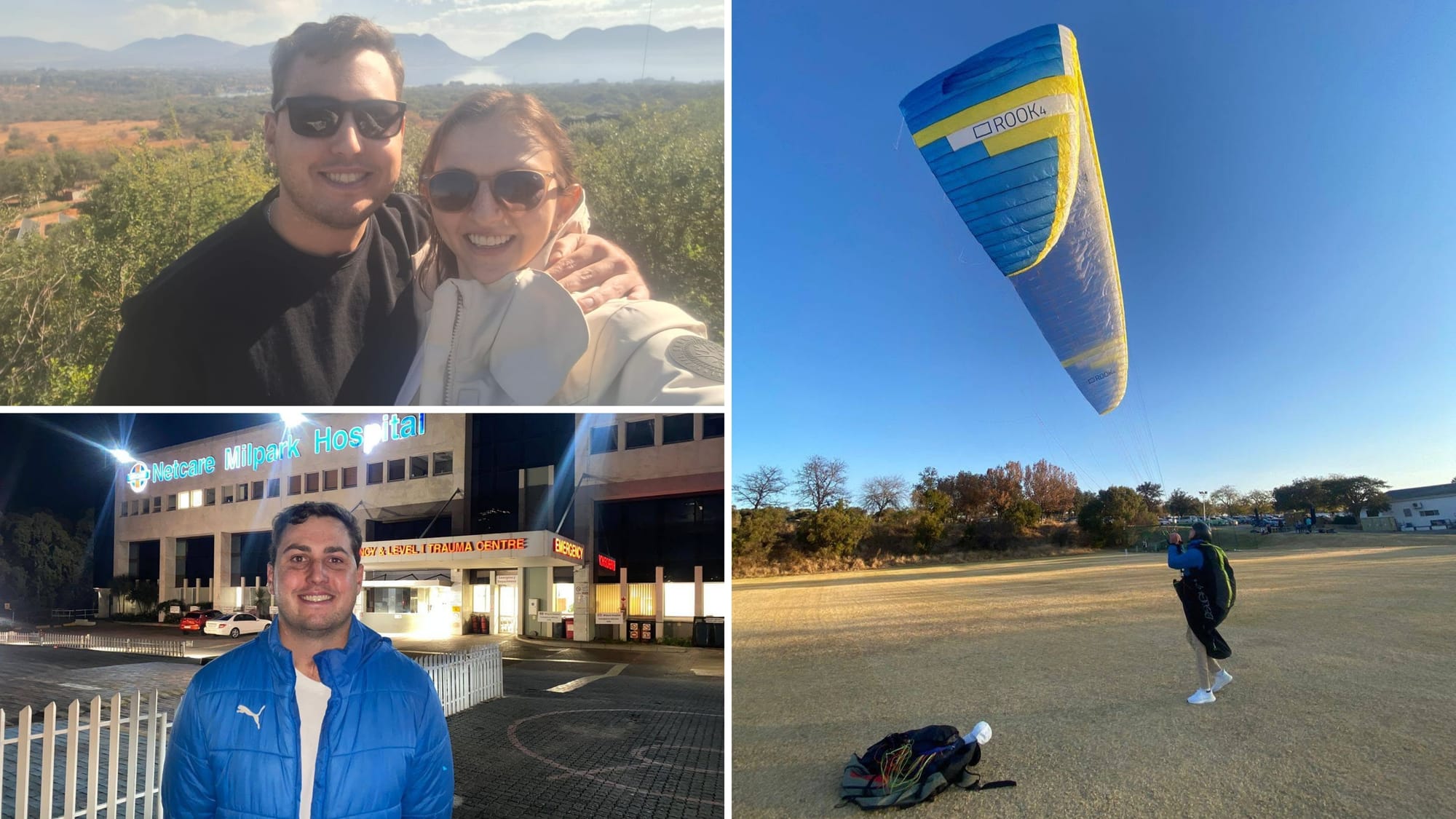
Last week, Kelvin van Baalen (29) returned to the same mountains, not seeking redemption, not chasing a podium finish and certainly not trying to prove anyone wrong. He returned because he simply loves to fly.
His participation in the 2026 Barberton Paragliding Open marked far more than another competition on the calendar. It was the closing of one chapter and the beginning of another, demonstrating that while life can be altered in an instant, determination, patience and humility can carry a person further than they ever imagined.
Growing up in Johannesburg, Kelvin's passion for flying was almost inevitable. His father had been a paraglider pilot since before he was born, and many of his childhood weekends were spent on mountain slopes watching colourful wings take to the sky. At just 16 years old, he earned his own wings and quickly discovered that flying was more than a hobby. "Everyone else was going to parties," he recalled. "I was driving to Rustenburg to fly."
 Anchen Coetzee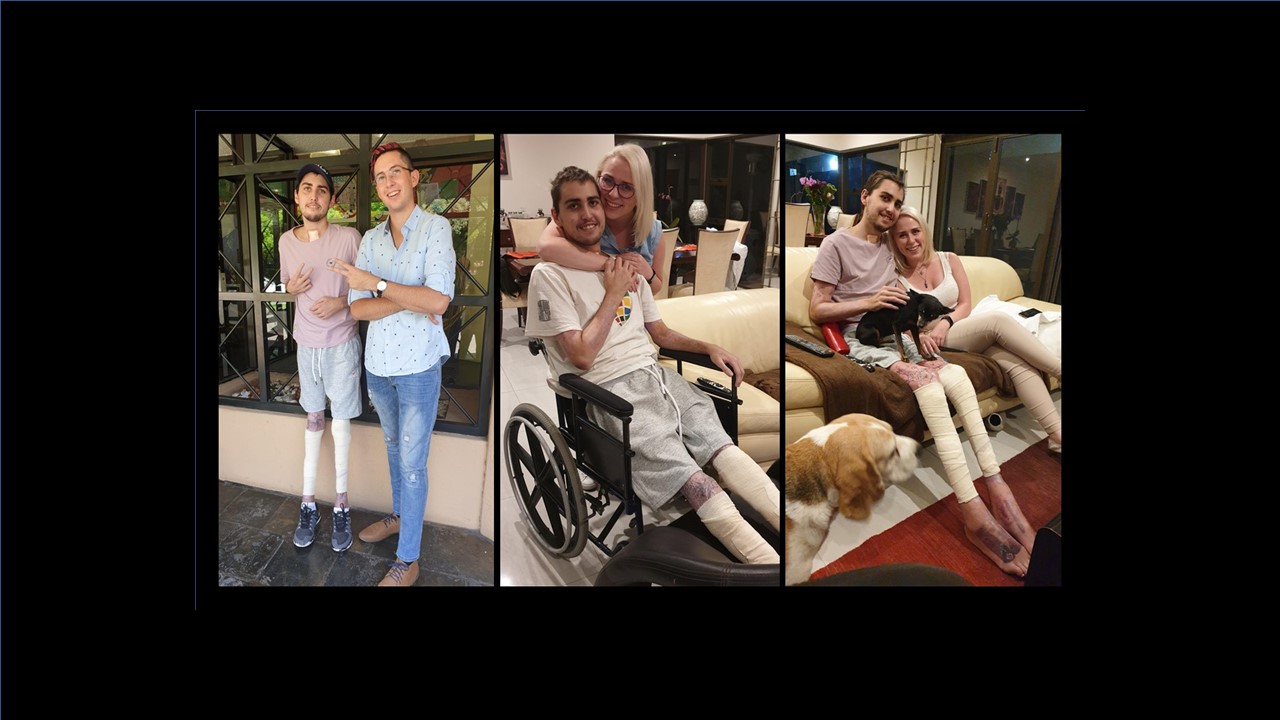
Although he enrolled for a BA Law degree at university, largely to satisfy his mother's wishes, he was in the middle of his third year when the accident happened and he never completed it. He did, however, complete a BCom Finance degree in 2025.
Kelvin’s heart had always belonged to aviation and the freedom that came with soaring above the landscape. By the time he was 21, Kelvin had already built an impressive reputation in competitive paragliding. The Barberton Open had become a familiar event on his calendar, and the 2018 competition would have been his fourth appearance. Instead, it became the day everything changed.
Contrary to what many people have assumed over the years, there was nothing unusual about the weather. "The weather was fine," he explained. "The race had started well and I was flying along the ridge as normal."
As conditions weakened, however, he found himself lower than expected and was forced to search for a suitable landing area. Initially aiming for an open patch beyond the road, he changed his approach at the last moment when he realised the terrain was covered with dense bush that would make recovering his wing extremely difficult.
It was a split-second decision that would have devastating consequences. Hidden from view was a power line. "I didn't see it until the very last second," he said. "I tried to turn away, but it was too late."
He struck the 14 KVA power line with his hip before being subjected to a massive electric shock that rendered him unconscious. When he regained consciousness, he was lying on the ground engulfed in flames. Still strapped into his harness, he somehow managed to release himself before rolling repeatedly across the ground to extinguish the fire.
"I could see the bone in my left leg. I couldn't stand. I was completely helpless." Fortunately, someone witnessed the incident and emergency services were alerted. He was taken to hospital in Nelspruit before being airlifted to Milpark Hospital in Johannesburg.
What followed was almost unimaginable.
Kelvin spent 413 days in intensive care, believed to be the longest ICU stay recorded at the hospital. Over the years he has undergone around 40 operations and accumulated the country's highest medical aid bill! The recovery that followed was measured not in weeks or months, but in years.
It began in a wheelchair before progressing to a walking frame, then two crutches, one crutch and, eventually, independent walking. "There were times during physiotherapy when I wondered what the point was because nothing seemed to be changing," he said. "Then suddenly I could stand. Later I could walk a little. Improvement doesn't happen overnight. It builds slowly."
Today, he believes that lesson extends far beyond physical rehabilitation.
"People expect instant results in everything, their careers, learning new skills or recovering from setbacks. Real progress takes time,” he said. Yet perhaps the greatest surprise came when he returned to the skies. After years of rehabilitation and strengthening his body, Kelvin completed his first flight again in the middle of last year. While there had been understandable concerns about take-offs and landings, the actual flying felt strangely familiar.
"It was like riding a bicycle," he said. "Once I was in the air, everything came back naturally." Landing requires more planning than before, and launching remains physically demanding, but his confidence has steadily returned with every flight. The Barberton Open marked only his first competition since the accident.
Before the competition began, Kelvin addressed fellow pilots, sharing his journey from enthusiastic teenager to hospital patient and eventually back to competitive flying. His message, however, was not one of motivation or inspiration. Instead, it was a frank lesson in responsibility. "My accident wasn't a skill issue," he told those gathered. "It was a complacency issue." Those words have since resonated widely after he shared them on social media.
"I had the experience. I had the hours. I had the skills. What I didn't have that day was the discipline. We owe it to ourselves and to everyone who loves us never to let our guard down." His return to Barberton reflected exactly that new mind-set.
Over five competition tasks he completed five successful launches and five safe landings, eventually finishing fourth in his category against around 25 competitors. Yet it was one decision that meant more to him than any result. During one task, after flying for 45 minutes, he chose to abandon the competition because the available landing options were not ones he felt completely comfortable attempting.
"I walked away from points on the board to make a decision I could live with," he later wrote. "That's the part I'm proudest of. Not the result. The discipline and the maturity to step away. The old Kelvin would never have done that."
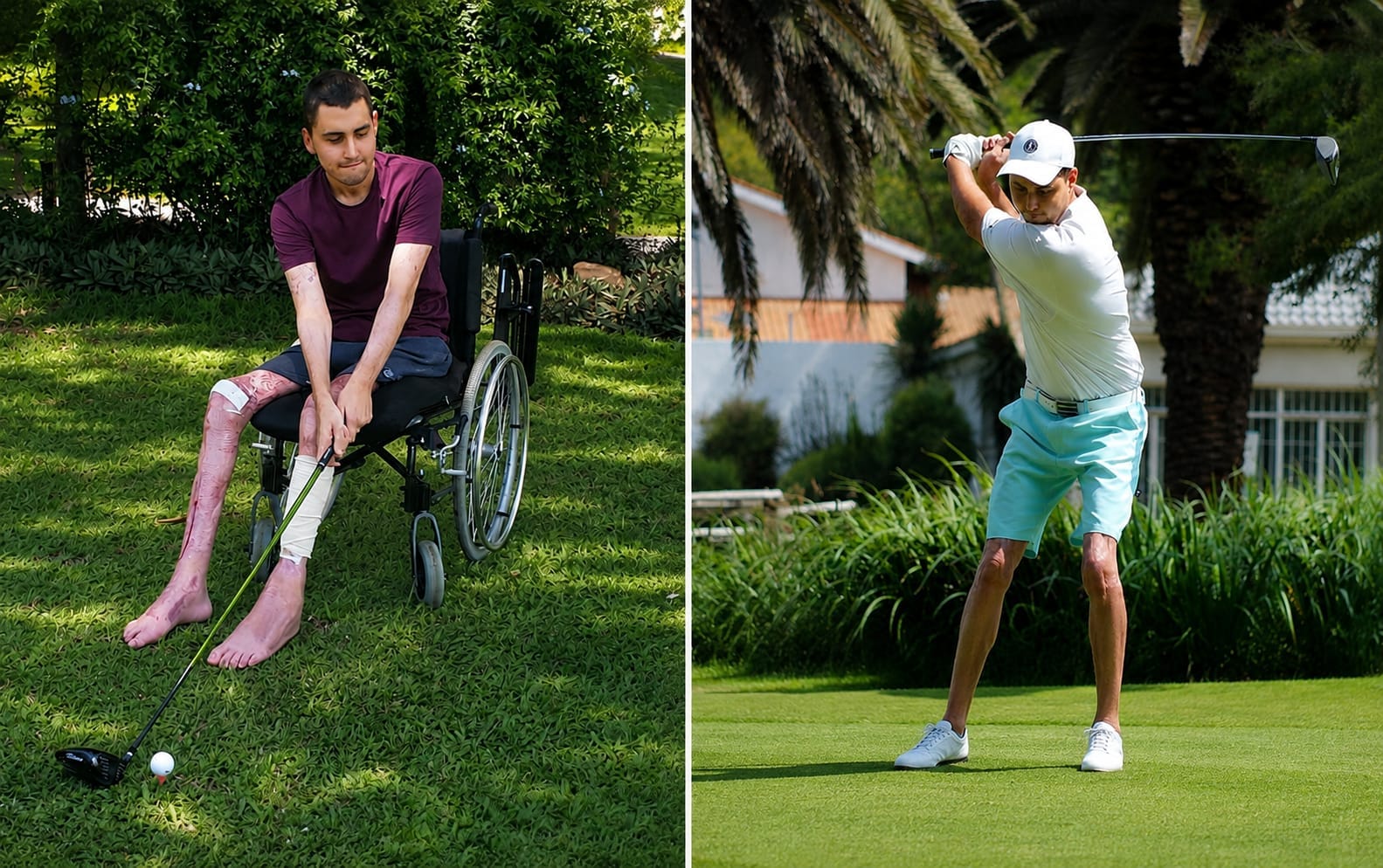
Away from paragliding, Kelvin has discovered another sporting passion. Unable to return to many physical activities, he took up golf, reasoning that hitting a stationary ball might suit his body's limitations better than running.
The decision proved to be another success story. Today he plays off a scratch handicap, competes for Johannesburg Country Club and ranks among South Africa's leading disabled golfers, regularly competing against able-bodied players. Remarkably, the day before speaking to De Kaap Echo, he carded a flawless round of 68 without a single bogey.
Despite everything he has endured, Kelvin is reluctant to present himself as a motivational speaker. "I don't really like all the motivational stuff," he admitted. "It always sounds scripted. I'd rather lead by example." Perhaps that is exactly why his story carries such weight.
It is not a tale of someone conquering impossible odds through dramatic speeches or inspirational slogans. It is the story of a man who accepted that recovery would be slow, that mistakes carry consequences, and that true courage sometimes lies in walking away rather than pushing ahead.
Eight years after Barberton nearly claimed his life, the mountains welcomed him back. This time, he flew not with the confidence of youth, but with the wisdom earned through pain, perseverance and patience, and when the 2027 Barberton Paragliding Open comes around, he already knows exactly where he wants to be.
Back in the sky.
 Naomi Roebert
 Mariana Balt
 Charlotte Hayes
 Liz Thorne

Comments ()