
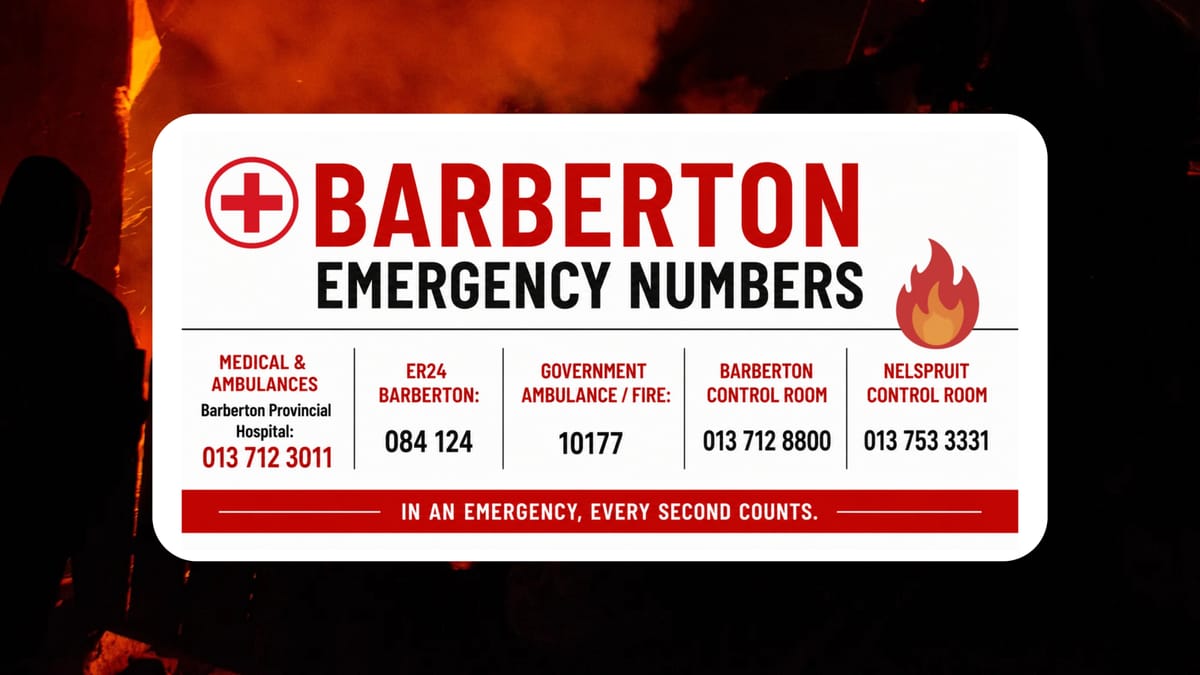
From candles and paraffin stoves to generators and overloaded plug points, many of the alternative solutions people rely on during power outages can quickly become dangerous if not used responsibly.


As winter settles over the Lowveld and electricity interruptions continue to affect many communities, fire safety has become an increasingly important concern for households across Barberton and the De Kaap Valley.
From candles and paraffin stoves to generators and overloaded plug points, many of the alternative solutions people rely on during power outages can quickly become dangerous if not used responsibly. Local emergency services warn that winter months often see a rise in household fires, particularly in areas where residents depend on open flames or temporary heating methods.
While load shedding may be less severe than in previous years, unexpected outages and infrastructure problems still leave many families turning to backup lighting and heating solutions, sometimes without fully understanding the risks involved.
Candles remain one of the most common causes of accidental household fires. A candle left unattended for only a few minutes can easily ignite curtains, bedding, furniture or wooden surfaces. Safety experts advise residents never to leave candles burning in empty rooms or while sleeping.
Candles should always be placed on stable, non-flammable surfaces and kept well away from children and pets. Glass jars or deep candle holders can also help reduce the risk of candles tipping over.
Paraffin stoves, still widely used in some households, present another serious danger. Faulty appliances, leaking fuel or stoves placed too close to curtains and furniture can quickly lead to devastating fires. Residents are encouraged to regularly inspect paraffin appliances for leaks and to ensure that stoves are completely extinguished before refilling them.
Children should never be left unattended near paraffin stoves or heaters.
Generators have also become increasingly common in homes and businesses across the region. While they provide valuable backup power, incorrect use can create both fire and health hazards. Generators should never be operated indoors, inside garages or near windows and doors because of the danger of carbon monoxide poisoning.

Fuel for generators should always be stored safely in approved containers and kept away from open flames or heat sources. Experts also caution against overloading extension cords or using damaged electrical cables, which can overheat and spark fires.
Winter heating methods add another layer of concern. Electric and gas heaters are often placed too close to blankets, clothing or furniture. Emergency personnel recommend keeping at least a one-metre safety space around heaters and switching them off before leaving a room or going to bed.
Simple precautions can make a significant difference during emergencies. Firefighters recommend that every household keep a bucket of sand, water or a basic fire extinguisher nearby, especially in kitchens or areas where open flames are used regularly. Smoke alarms, although not yet common in many South African homes, can also provide valuable early warning during night time fires.
Community awareness remains one of the strongest tools in preventing tragedies. Neighbours are encouraged to look out for elderly residents, families with small children and people living alone during extended outages.
Authorities stress that many household fires are preventable and often caused by small oversights that quickly spiral out of control. As Barberton households prepare for the colder weeks ahead, residents are being reminded that staying warm and keeping the lights on should never come at the cost of safety.
A few careful habits today could prevent devastating losses tomorrow.
 Naomi Roebert
 Liz Thorne
 Mariana Balt



Comments ()