
The Todd family: from gold rush roots to Lowveld agriculture
The Todd family story stretches back to the gold rush era of the late 1800s and evolved alongside the development of the Lowveld itself.
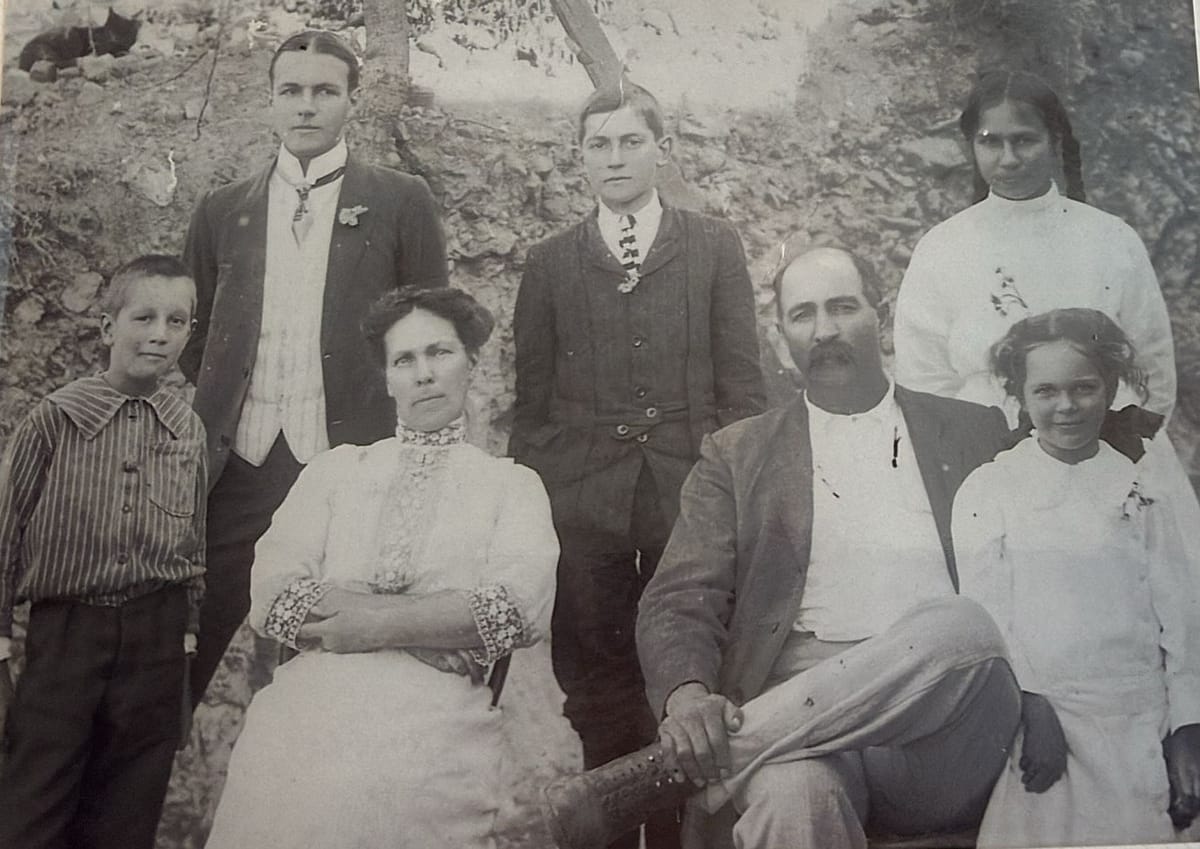
Among the names woven into Barberton’s early history, the Todd family stands as one of the town’s enduring pioneer families. Their story stretches back to the gold rush era of the late 1800s and evolved alongside the development of the Lowveld itself.
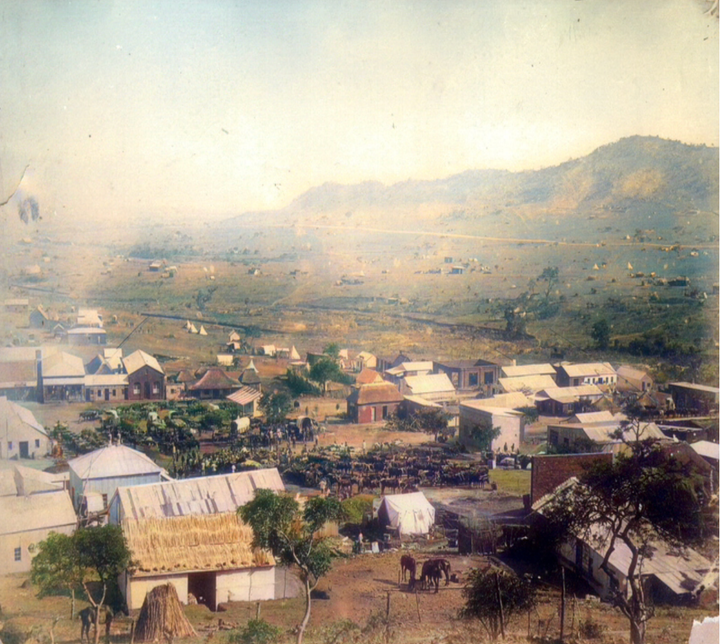
Historical records indicate that members of the Todd family arrived in Barberton during the height of the gold rush, when fortune-seekers, traders and entrepreneurs poured into the valley.
While gold drew many families to Barberton, it was agriculture that sustained the region long after the initial rush faded. The Todd family played a meaningful role in that transition.
Samuel Todd (Jnr) was born on February 2, 1863 in an ox wagon between Durban and Pietermaritzburg, shortly after his parents, Samuel and Sarah Todd, arrived from England. His parents were blessed with another five sons, James, Alfred, Harry, Percy and Charles. His father had worked at Kew Gardens in London before emigrating to South Africa, and young Samuel inherited both his father’s horticultural knowledge and his passion for plant grafting and citrus cultivation.
After leaving school, Samuel worked alongside his father for several years. On March 1, 1877, he left Pietermaritzburg with a substantial load of fruit trees and plants, determined to explore opportunities in the De Kaap Valley. He eventually arrived in Barberton on March 28, 1887.
Land near town was scarce due to intense mining activity. Undeterred, Samuel walked further afield until he reached the foot of Mount Morgan, where he identified and marked out a suitable piece of land. A perennial stream flowed down the hillside across the property, a decisive advantage for farming.
After briefly returning to Pietermaritzburg, he came back to the De Kaap Valley on November 28, 1887 to establish his venture permanently. His business partner, Tom Harris, accompanied him with ox wagons loaded with sub-tropical fruit trees and plants.
Descending the notorious Chute on the Natal road, the steep pass before Barberton as we know it today, was no simple undertaking. The heavily laden wagons had to be dismantled at the top and carefully lowered piece by piece before being reassembled at the bottom.
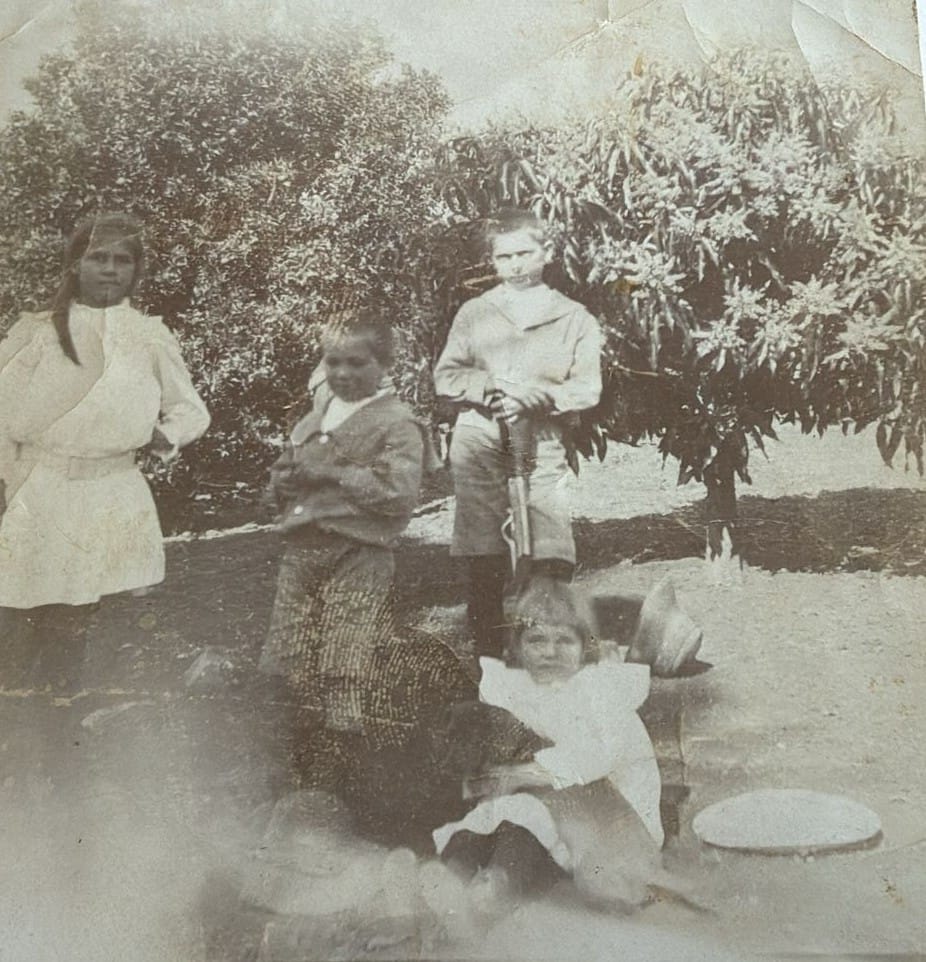
Upon arrival in Barberton, Samuel purchased a prefabricated kit house made of wood and corrugated iron, which he transported to his newly acquired land. There he established his homestead and named it Litchi Farm. He began planting litchis, oranges, lemons, bananas, pineapples, mangoes, naartjies and other sub-tropical crops.
At a time when tropical fruit cultivation in the Lowveld was still in its infancy, these early plantings helped lay foundations for what would later become one of Mpumalanga’s most important agricultural sectors. The Todd family’s involvement extended beyond litchis, contributing to the broader development of fruit farming in the region.
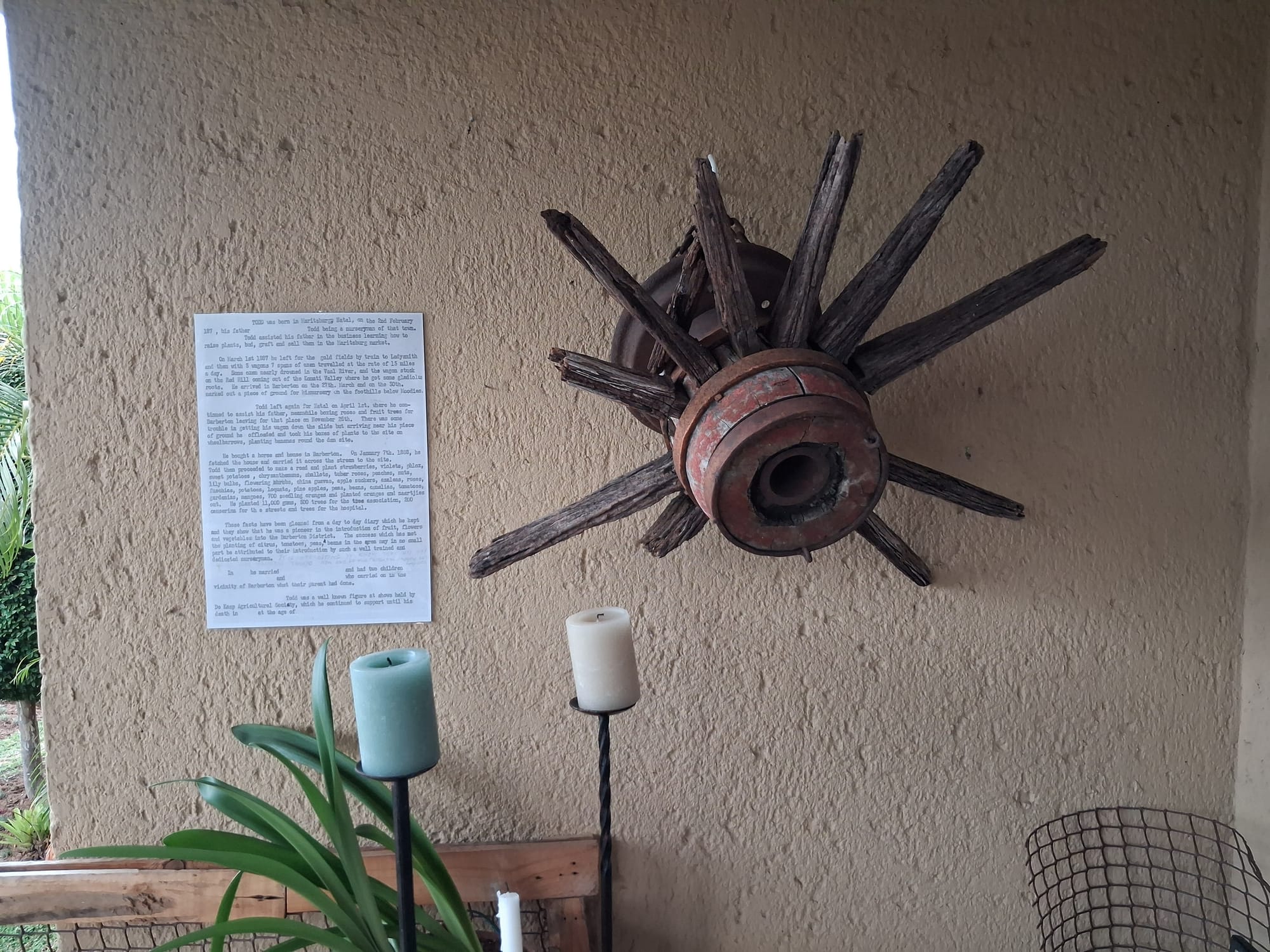
Samuel also planted mealies. When his first crop was ready, he transported it by wagon to the Queen’s River Bridge, where a mill operated. The miller, Lauritz Hansen, crushed the maize using machinery powered by a water wheel. The water wheel was eventually sold in 1980 to a museum in the Cape.
An entry in Samuel Todd’s diary, referenced by John Duncan in his book My De Kaap Valley, reads: “December 18, 1903 – a fine day, loaded wagons with fruit trees for Hugh Hall: loquats, about 25 pineapples, 500 peaches and about three dozen paw-paw trees.”
This entry reflects a business relationship with H.L. Hall near Nelspruit, who regularly ordered fruit trees from Samuel, further illustrating the interconnected growth of Lowveld agriculture.
Samuel married Ella Atmore in 1893. Five children were born of the marriage: Alan, Harry, Olive, Arthur and Mary. One of the family’s earliest landmarks, commonly referred to as Todd House, dates back to around 1887 and still stands today above what is now Kellar Park. Remarkably, the home has remained in family hands across generations, a rare continuity in a town shaped by boom-and-bust cycles.
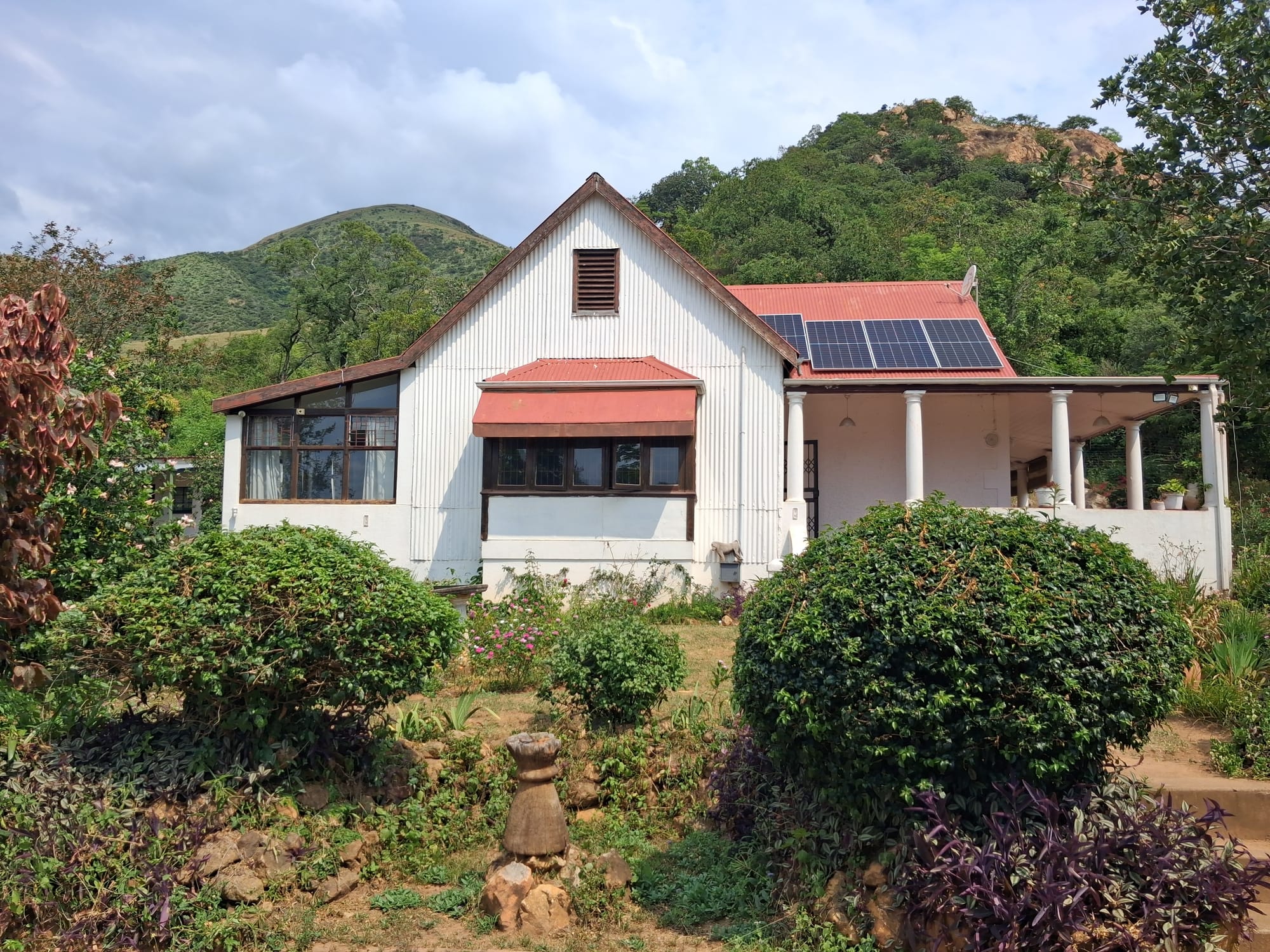
The house, which was constructed in 1895, was rented by Samuel. He used it as a stop-over for his wagons that brought fruit and vegetables to town three times a week. Before going back to the farm, he sold his fruit and vegetables at the local market and left the unsold items at this home.
The neighbours used to get their water from a well down at the foot of the property. There is also a huge fenced-in rock formation behind the property where ancient rock art was formerly located, and one of the valley's largest fig trees lies just above the well. Tragically, the rock art was destroyed by both souvenir hunters and mountain fires. After four years of renting the house beginning in 1915, Samuel finally bought it on February 17, 1919.
During his lifetime, Samuel acquired another property near the Queen’s River, naming it Biggar Farm. He passed away on July 18, 1928 and was buried in the Barberton Cemetery.
His descendants continued to shape the region’s agricultural and commercial landscape. Alan entered banking and married Zilla Harper; they had a daughter, Norma.
Arthur inherited Biggar Farm and married Marjorie Goodhead; their children were Eric and Noreen. In later years, Eric established Lurex Feeds on Biggar Farm, a business remembered by many locals in the 1980s. Eric sold it to OTK (Oos-Transvaal Kooperasie) in 1988 and the last descendants of Samuel Todd moved out of Barberton to Nelspruit.
Olive married George Gordon Duncan, linking the Todd family to another prominent Barberton pioneer family. They had two daughters, Betty and Jean, and two sons, Gordon and John.
Harry inherited Litchi Farm and married Molly Oates, who tragically passed away at the age of 33, a few weeks after giving birth to their son, Michael. Harry later married Elfie Otte, and they had three sons, Stanford, George and Andrew.
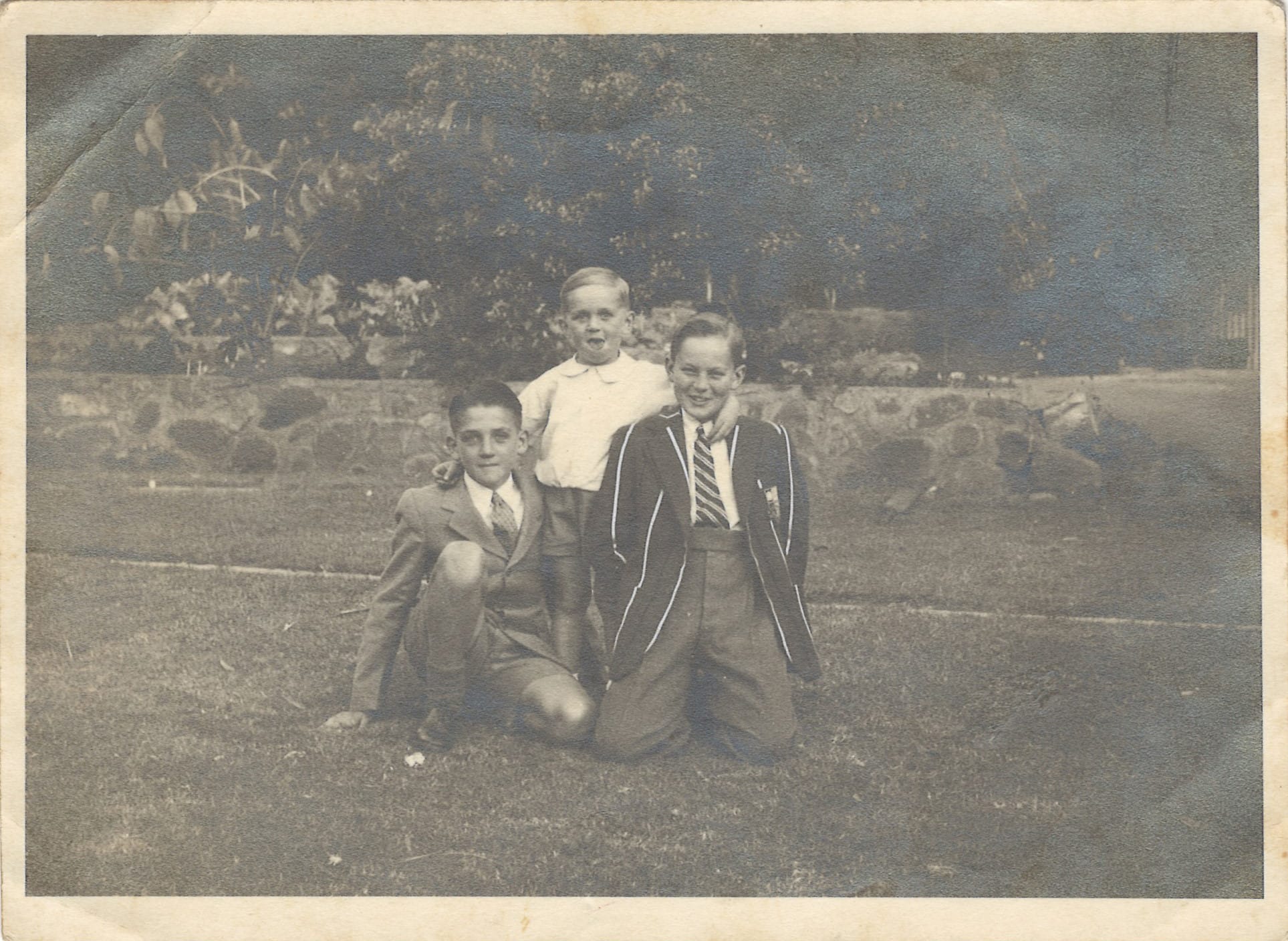
Mary married Glen Truter, owner of a local butchery, and they had four children, Arthur, Douglas, Zoë and Kay. They lived in Todd House. The house was declared a heritage house in 1996. A few years later it was sold and is now privately owned.
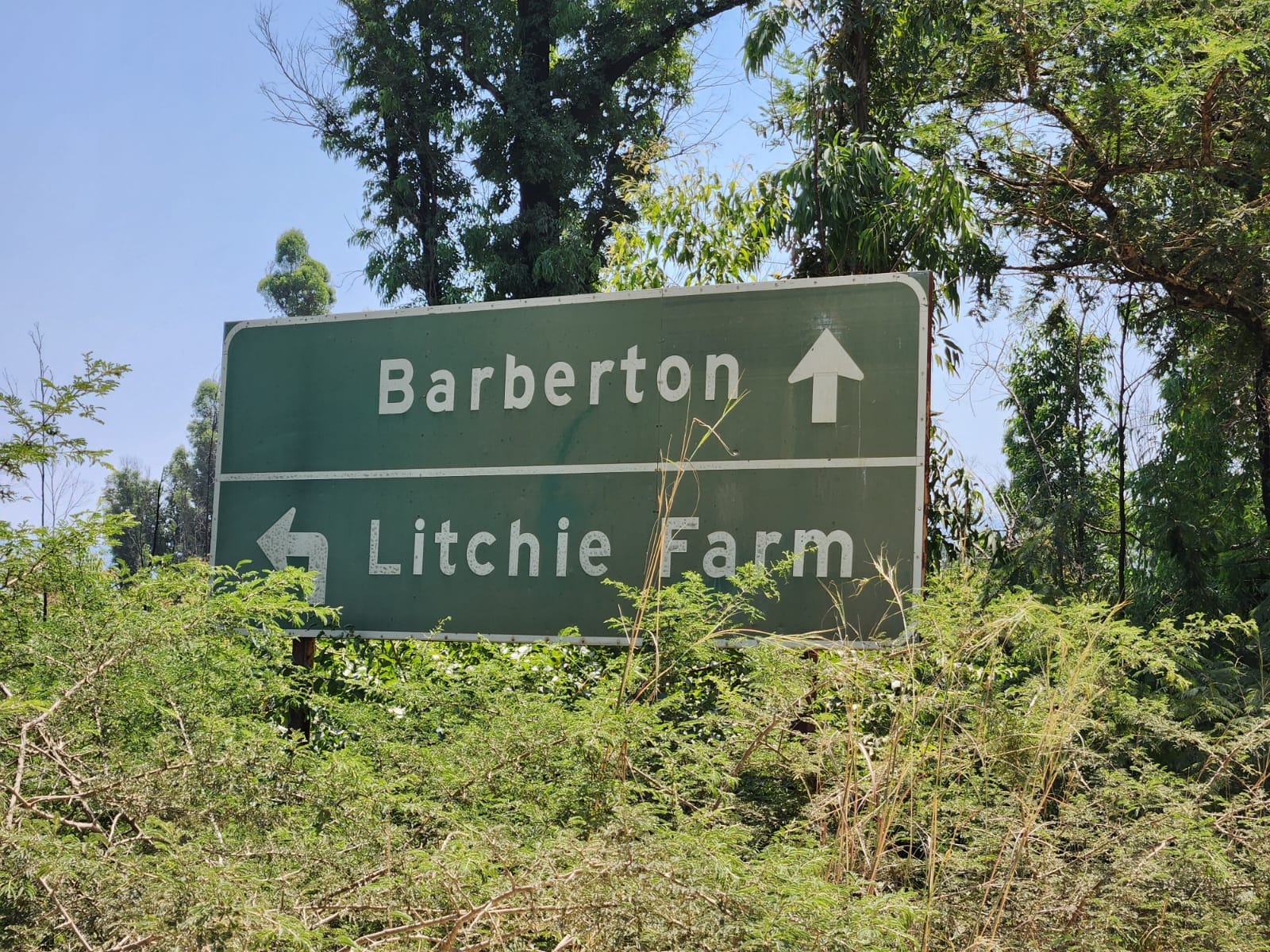
Today, Litchi Farm no longer resembles the thriving orchards of more than a century ago. Following changes in ownership under the new government, the property fell into disrepair and many of the historic trees were cut down for firewood, a heartbreaking reminder of the fragility of heritage landscapes.
Like many of Barberton’s early pioneer families, the Todd story mirrors the wider history of the town itself: drawn by gold, rooted in resilience, and sustained through adaptation. From ox wagons carrying fragile saplings down treacherous mountain passes to modern agricultural enterprises, the family’s journey forms part of the broader Lowveld narrative, one defined by enterprise, endurance and community.
Comments ()