
The Duncan's of Barberton: A family rooted in gold rush history
The Duncan family has been part of Barberton since the gold‑rush days of the 1880s. From early bakeries and stores to generations of local business involvement, their story, to this day, forms an important part of the town’s heritage.
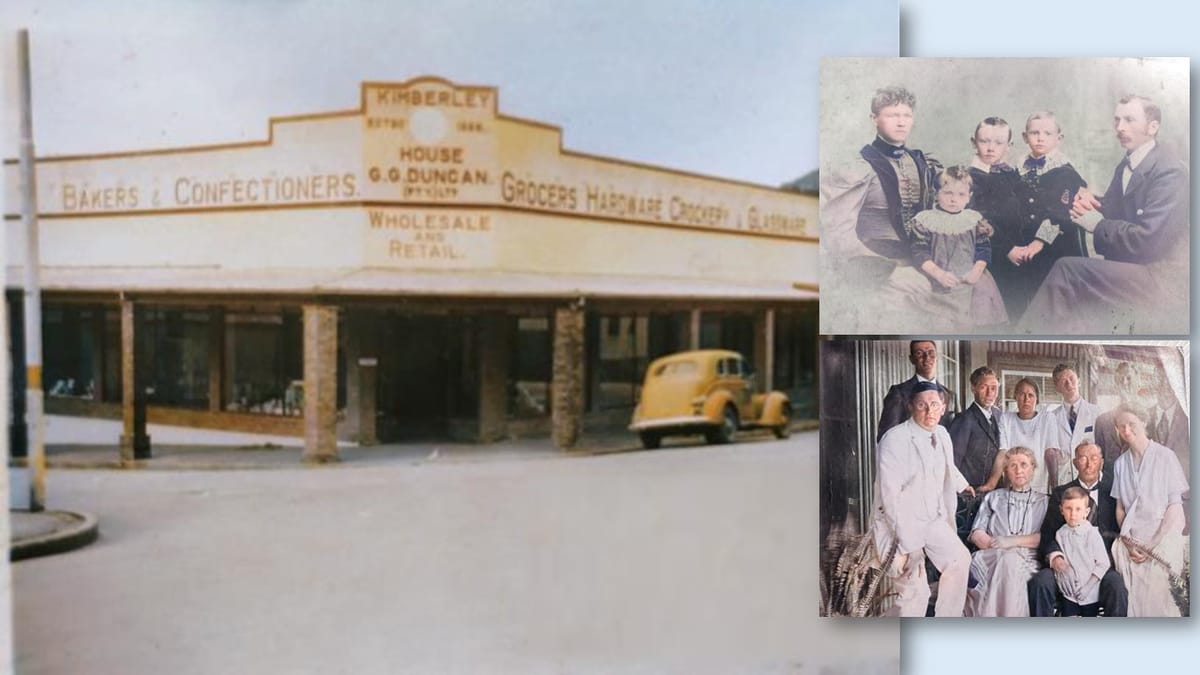
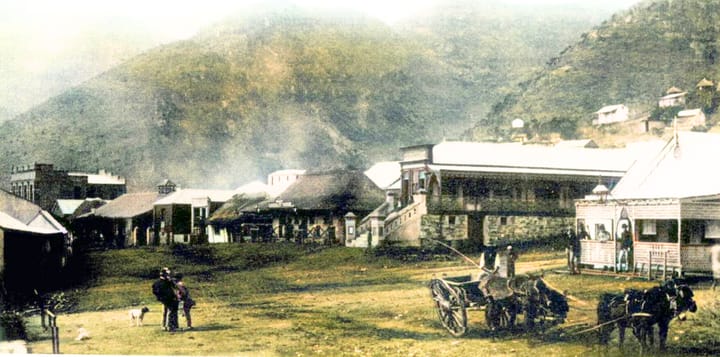
When gold was discovered in the De Kaap Valley in 1884, Barberton transformed almost overnight from a quiet, remote valley into a bustling mining town. Thousands of prospectors, traders and fortune seekers flooded into the area, creating both opportunity and chaos.
Among the early pioneers who helped shape the young settlement was the Duncan family, a name that would become woven into Barberton’s history for generations. At the centre of that story stands George Gordon Duncan, better known as GG, one of the town’s earliest merchant pioneers.
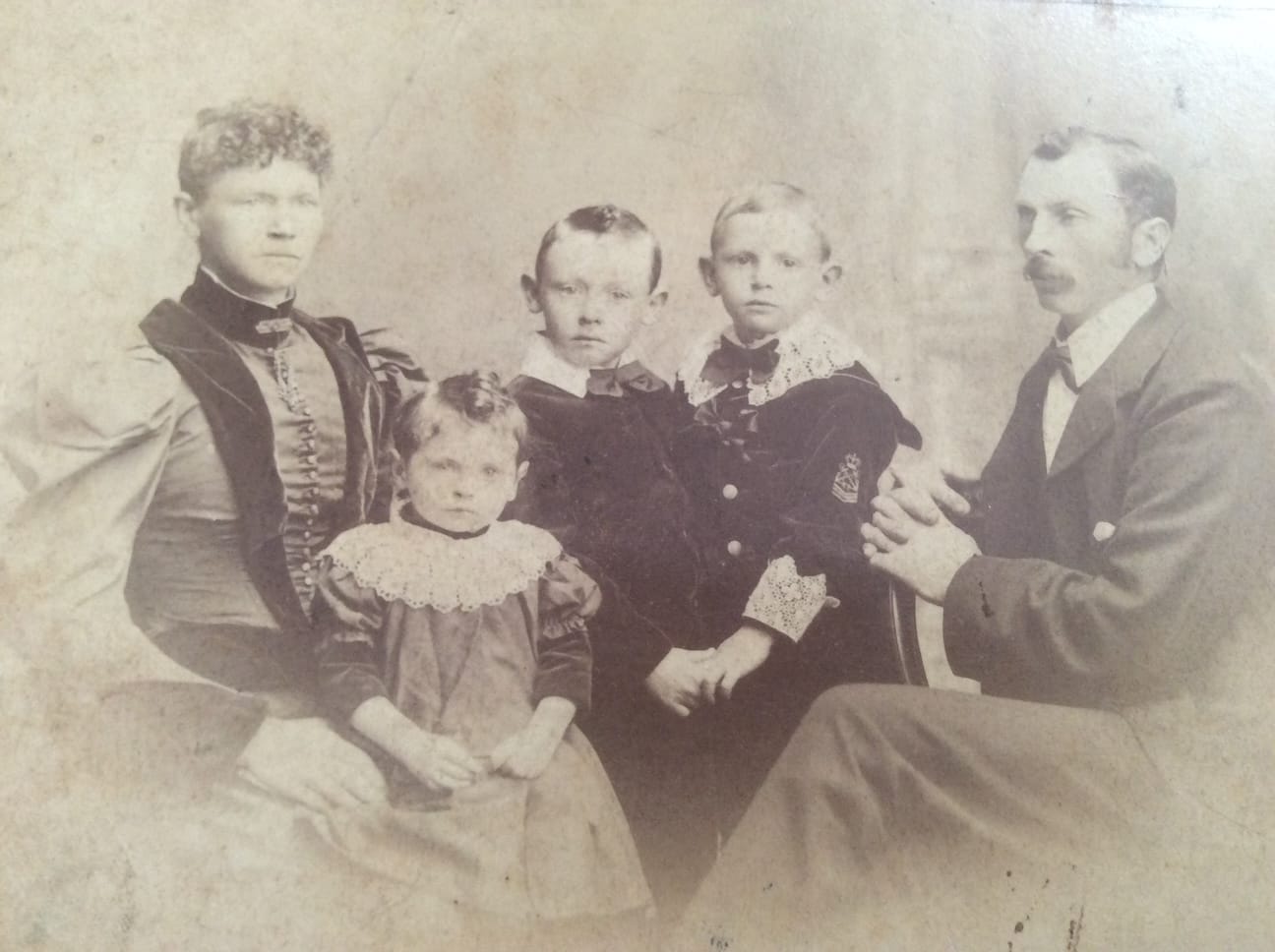
George Gordon Duncan was born on November 6, 1859 at Rosehearty near Fraserburgh on the north coast of Scotland. He was the fifth of eight children born to Captain James Duncan, a master mariner, and his wife Jean. His childhood was marked by hardship. When he was only eight years old, his father was killed at sea. The loss forced young George to leave school and help support his mother and siblings. He began working as a baker, a trade that would shape the course of his life.
After completing his apprenticeship with the Scottish firm Whytes Bakers and Biscuit Manufacturers, he followed the path of many young Scotsmen and sought opportunity abroad. In 1882, he sailed to South Africa on the sailing ship Nubian. He settled first in Port Elizabeth, where he worked for two years as manager of Whyte and Harriss’ bakery and biscuit factory. During this time, he married Elizabeth Jane Taylor of Gloucester, England, on June 15, 1884.
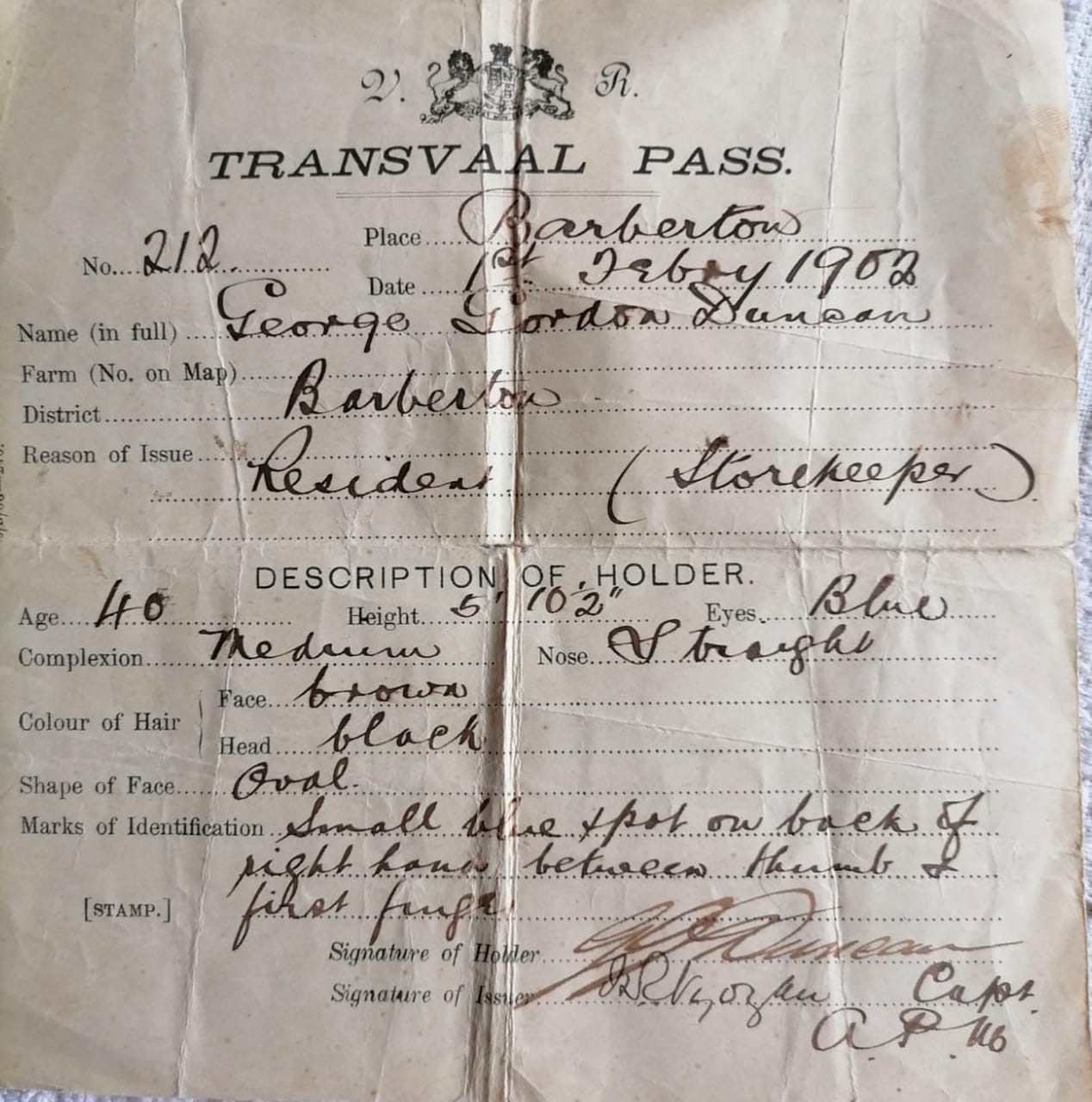
News of gold discoveries in the Transvaal soon reached the coastal towns, drawing ambitious men inland. Duncan travelled first to Kimberley and Johannesburg, but he decided not to establish a business there. Instead, he continued to Barberton, where the gold rush was already in full swing. He arrived in the town in October 1885.
At the time, Barberton was a rough and rapidly growing settlement. Duncan purchased four stands near the site of the present railway station, where he built a house and bakery. He started his business in modest fashion, personally delivering bread to distant mines such as Alpine. With the help of a donkey and a single assistant, he travelled long distances each day over rough terrain.
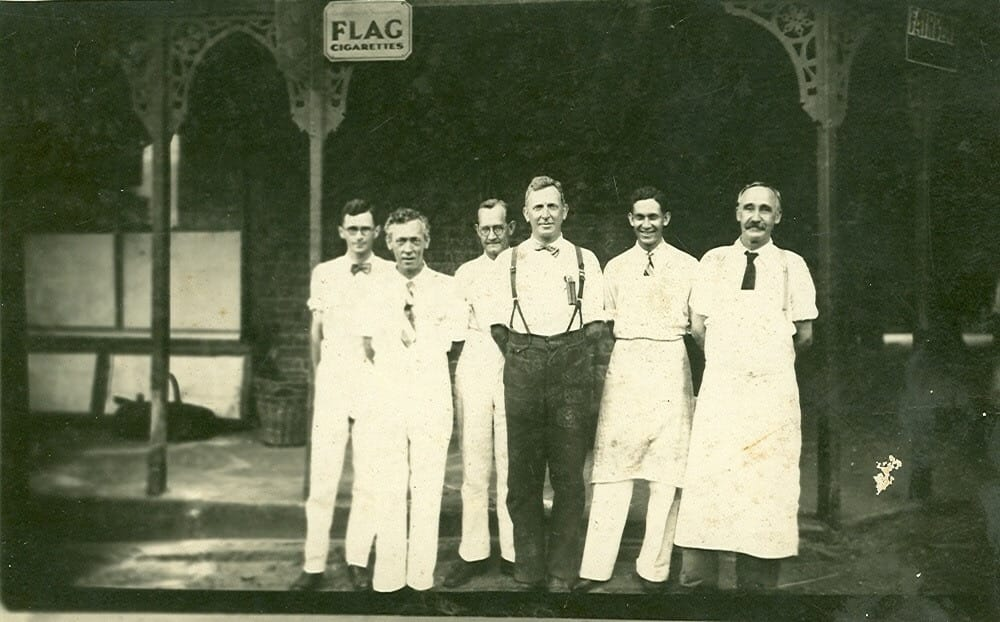
As the business grew, he acquired a horse and buggy, which made deliveries easier. Supplies, however, were a constant challenge. Soft flour arrived by ship from Canada to Durban, then travelled inland by ox wagon. Hard flour came from Australia to Delagoa Bay and was also transported by ox teams through difficult terrain, including the route known as Salvation Valley near Low’s Creek.
As Barberton grew, so did the Duncan family. When Elizabeth fell pregnant, the lack of proper medical facilities forced her to return to Scotland for the birth of their first child. Their son George was born in May 1886, and mother and child later returned to Barberton. Three more children followed: Harry, Florrie and Alex. Tragedy struck in 1895 when Elizabeth died of remittent fever at the age of 37.
By then, GG had established a solid business foundation. He sold his original property near the future railway station to the Nederlandsche Zuid-Afrikaansche Spoorweg Maatschappij for £600, a considerable sum at the time. He then purchased the well-known Kimberley House premises in town.
As his enterprises grew, Duncan acquired additional properties for warehouses and trading stores. He expanded beyond Barberton, establishing businesses in the Pioneer Valley, Twelve Mile House, Jamestown, Clutha, Noord Kaap and at the Sheba Mine. In March 1896, he married Janet Maxwell, daughter of James and Jane Maxwell of Dowalton in Wigtownshire, Scotland. The couple had five children, Maxwell, Errol, Ena, William and another boy who died in infancy.
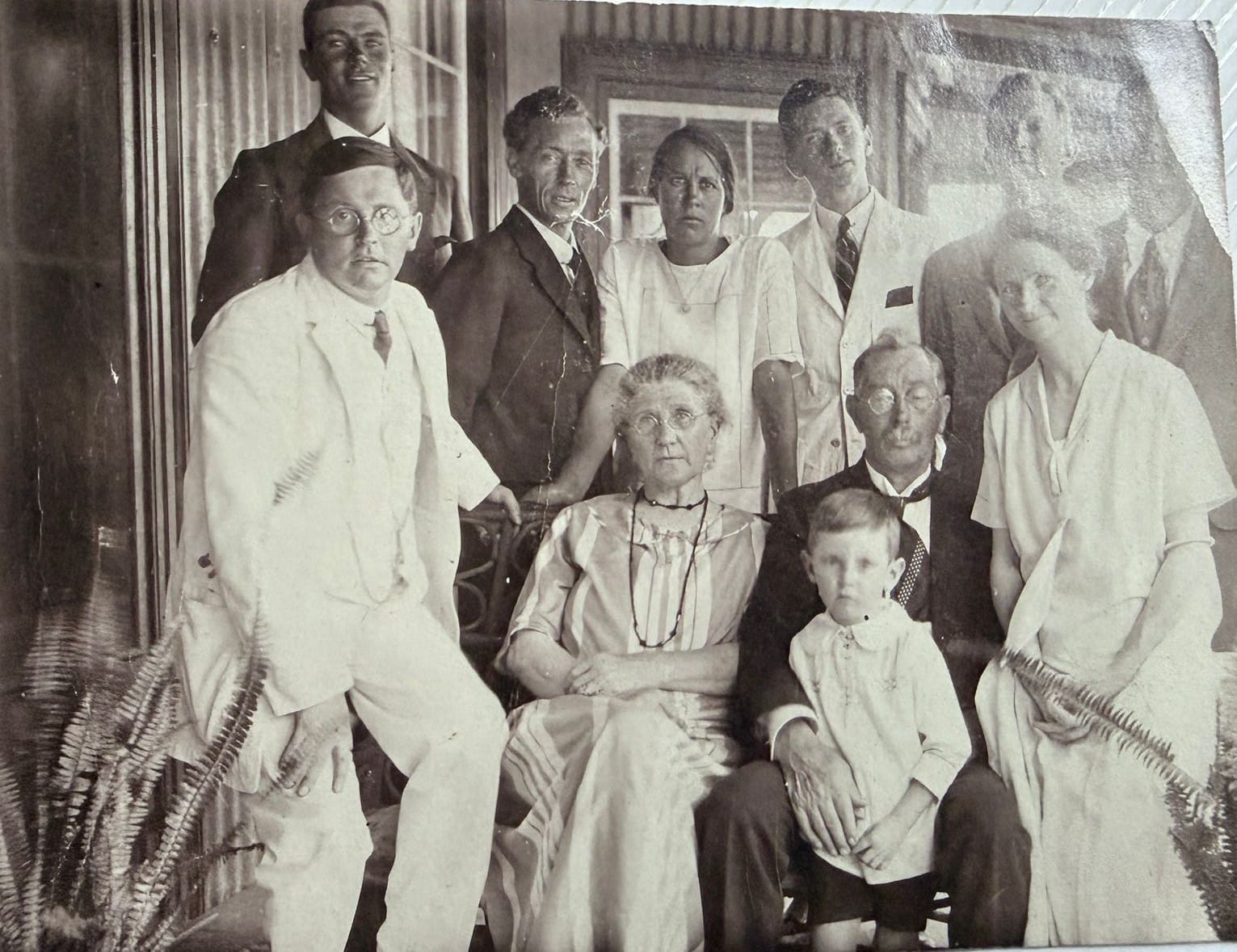
When his older sons George and Harry were old enough, Duncan sent them to Scotland for their education. They attended the well-known Watson’s School in Edinburgh. After completing their studies, both sons returned to South Africa in the early 1900s. Together with their brother William, they later took over the family businesses after their father’s death.
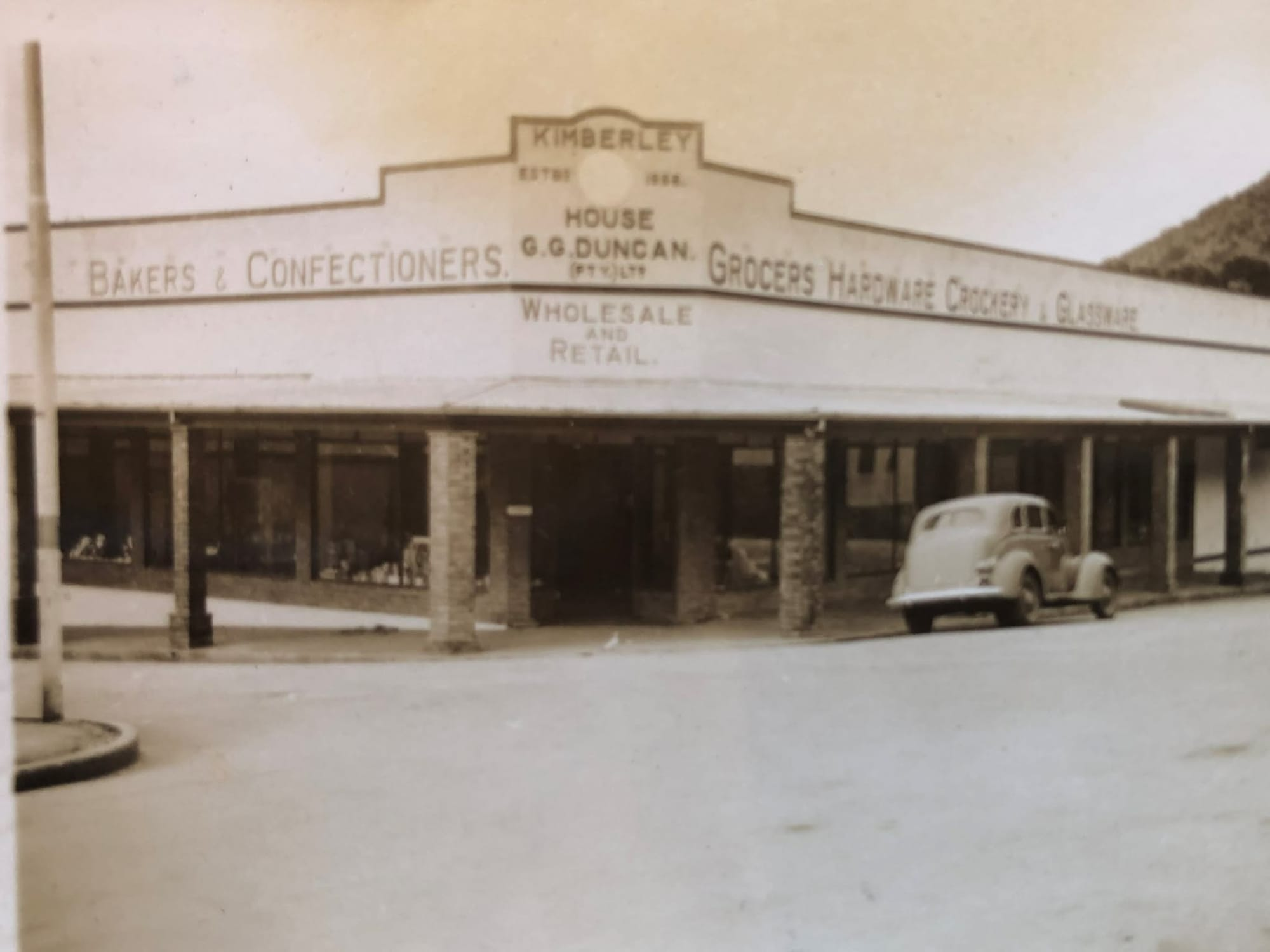
In 1914, Duncan purchased Belhaven House, a distinctive pressed-steel residence built about a decade earlier.
The Duncan family lived at Belhaven for more than sixty years, with generations connected to the house until 1978. Today, it forms part of Barberton’s heritage landscape and stands as a reminder of the town’s early merchant families. Later generations of the family still lived at Kimberley House in White Street, just behind Belhaven.
🔴 You might also like to read:
 Lynette Spencer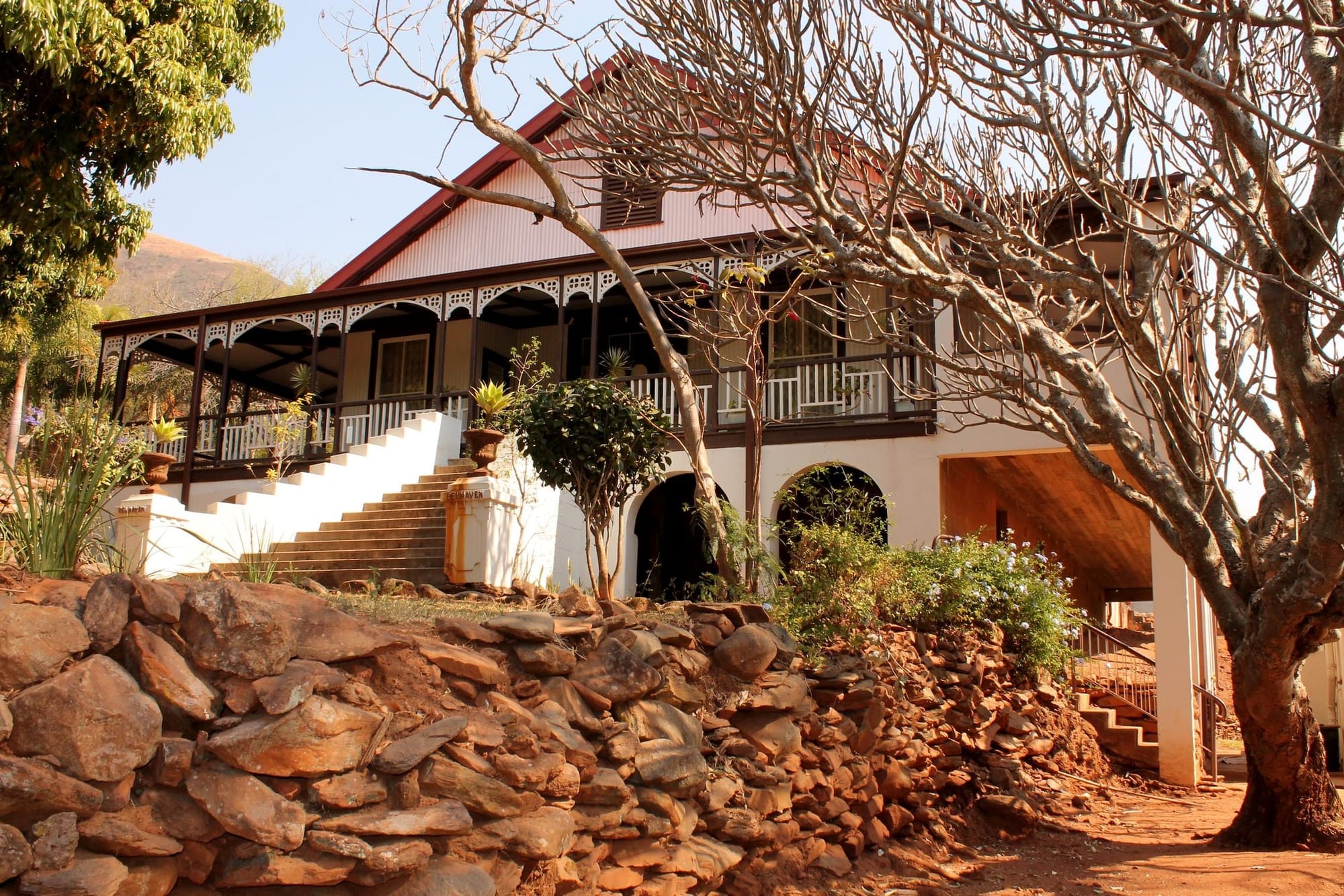
George, the eldest son, married Olive Todd, whose father was a nurseryman in Pietermaritzburg. He had come to Barberton in the early days and played a role in introducing the first citrus, litchi and mango trees to the district. Their children were Betty, Jean, Gordon and John. Harry married Molly Oates and inherited Litchi Farm, which produced fruit for many years before falling into decline under later government ownership.
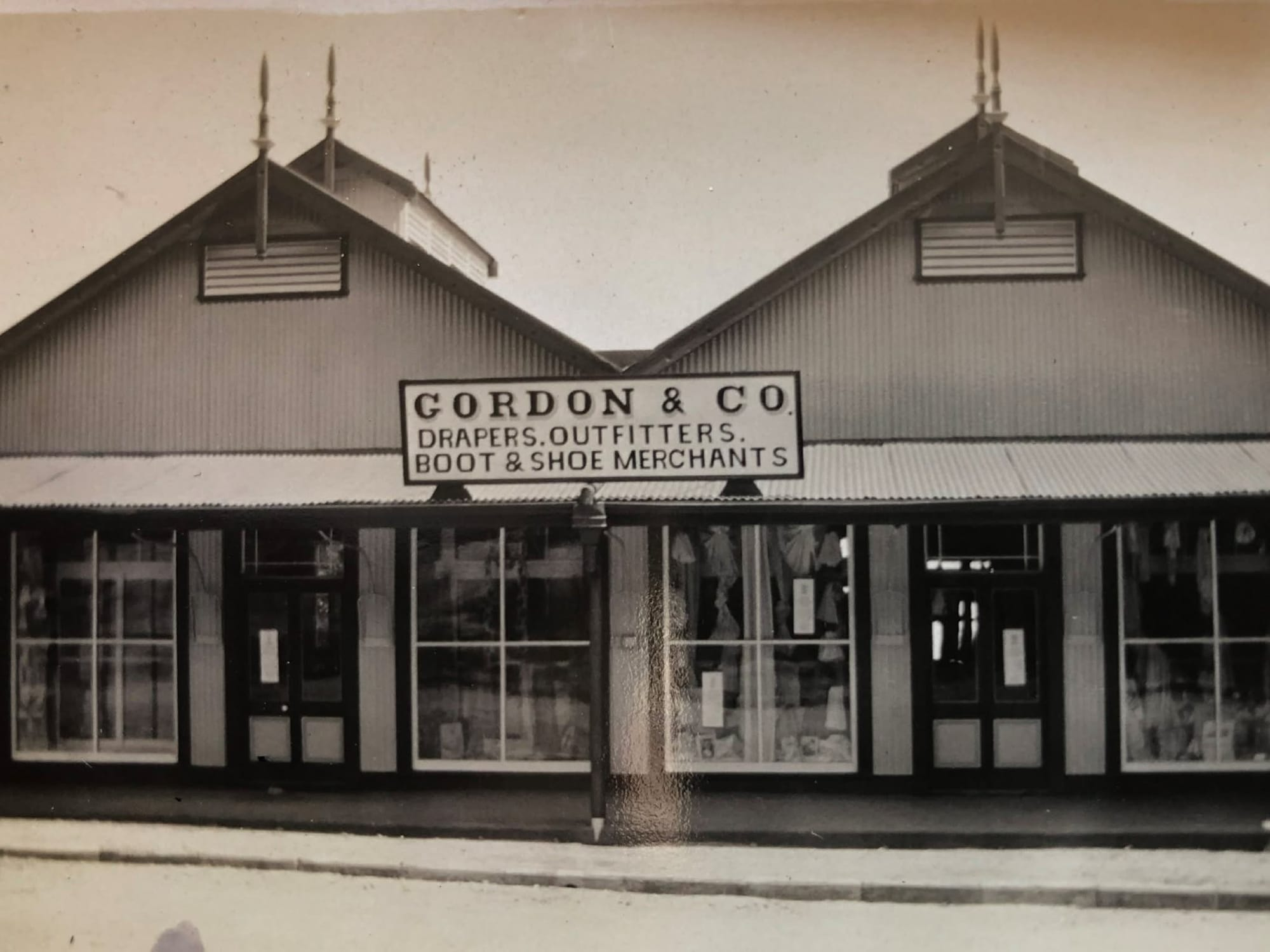
One of GG’s final business ventures was the establishment of a drapery store next to the hardware business. The store, known as Gordon’s, was destroyed in the great fire of August 7, 1948, along with several neighbouring properties. New premises were later built, combining the drapery and grocery businesses under one roof.
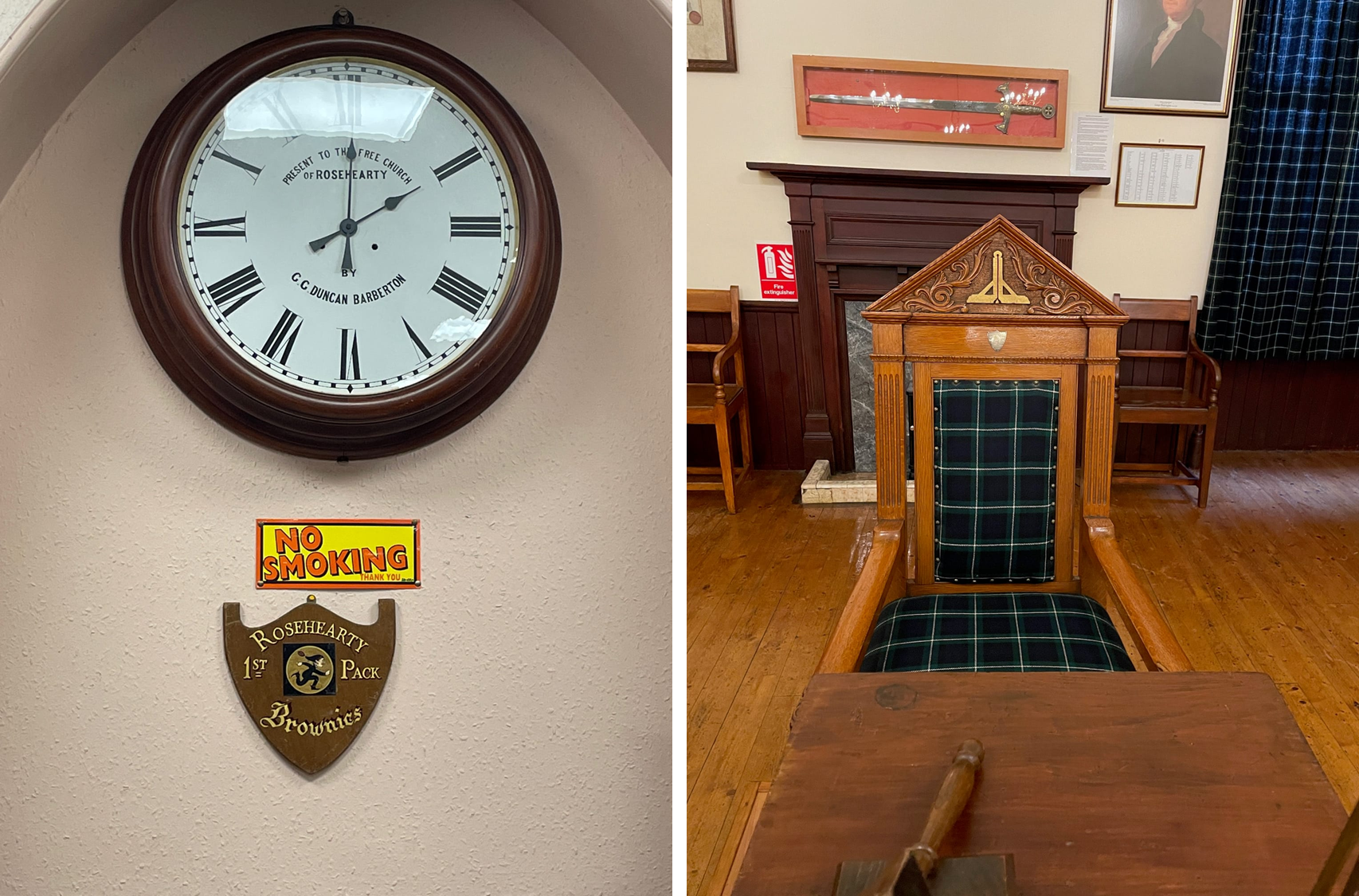
Although widely respected, GG Duncan never became deeply involved in municipal politics. He was often asked to stand for the town council but declined, believing that running a business and serving as a councillor at the same time could create conflicts. He did, however, serve on the Health Committee for a period. Duncan was also an active Freemason and served as Worshipful Master of the Barberton Lodge in 1903.
On his last visit to Scotland, Duncan stayed on the farm Landberrick, where his sister Annie lived. He died there on July 29, 1935 and was buried nearby at Mochrum in Wigtownshire.
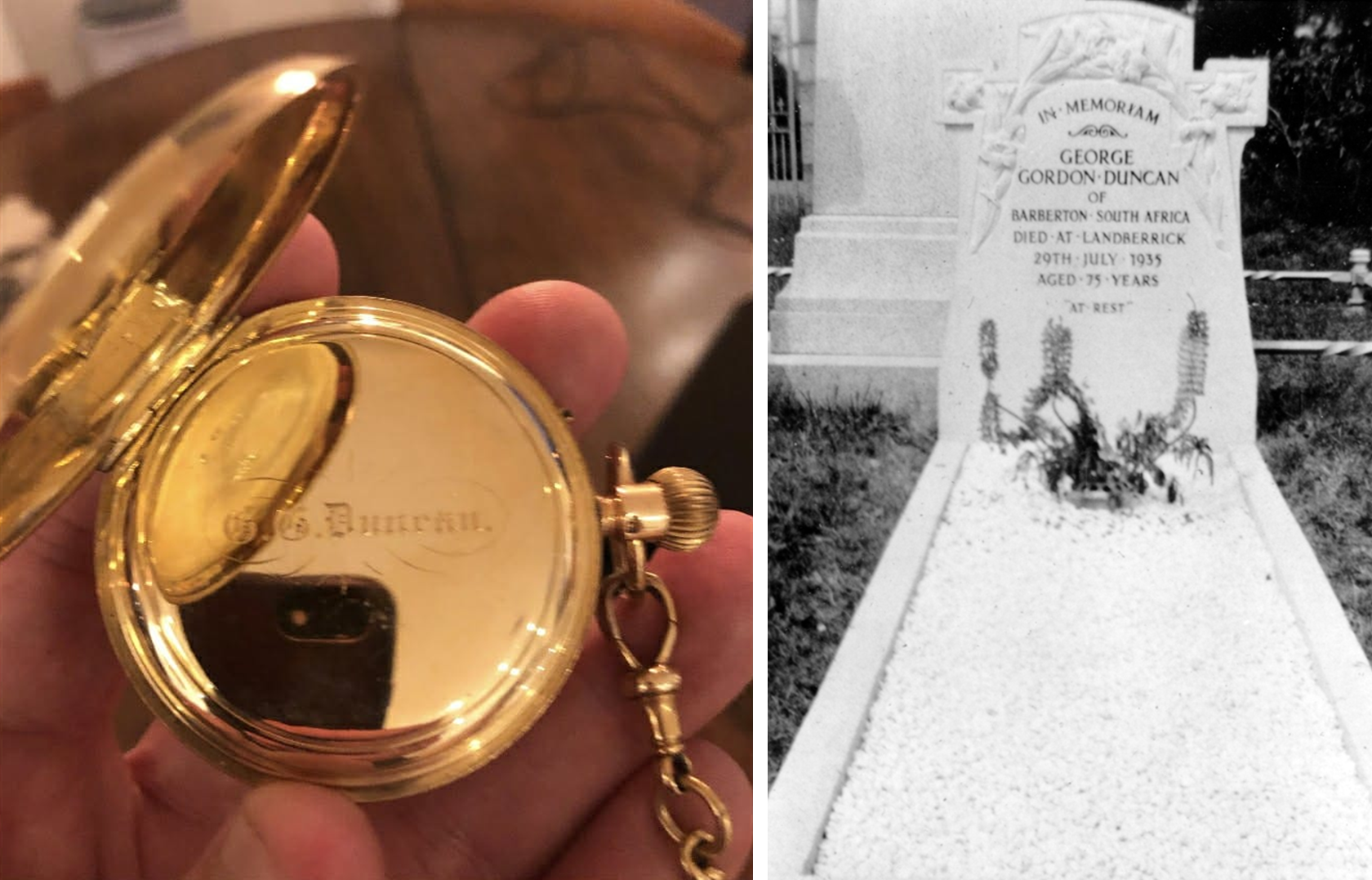
The Duncan name did not disappear with the gold rush generation. Descendants of the family remained active in Barberton’s business and civic life well into the twentieth century.
More than a century after the discovery of gold, the Duncan name remains familiar in Barberton. Some descendants still live in the district, while others have settled elsewhere in South Africa and abroad. From bakery ovens and store counters in the gold rush years to later generations of business and civic involvement, the story of the Duncan family mirrors the broader story of Barberton itself, one of opportunity, resilience and deep roots in the De Kaap Valley.
Another article will follow this one focusing on John Andrew Duncan, whom most of the present day Barbertonians will remember.
🔴 You might also like to read:
 Lynette Spencer
Comments ()