
Jamestown: The forgotten gold camp that came before Barberton
Before Barberton became a booming gold-rush town, there was Jamestown, a rough, fever-ridden diggers’ camp where some of the valley’s first gold was found. Today it has almost vanished from memory, but its story marks the true beginning of the Barberton goldfields.
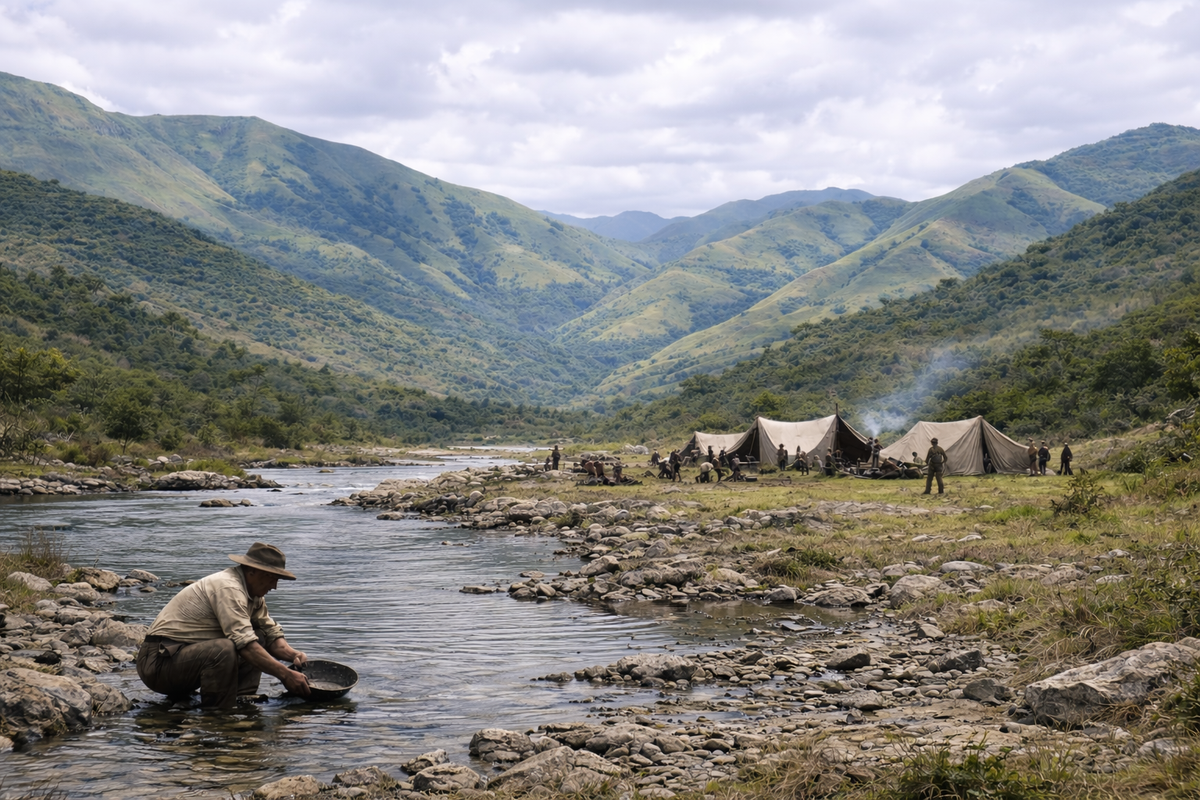
Long before Barberton’s streets were surveyed, its hotels filled and its mines began producing the gold that would make it famous, there was another place in the De Kaap Valley where hopeful prospectors first gathered. That place was Jamestown, a small, rough diggers’ camp that today survives only in scattered historical references but which played a crucial role in the earliest days of the Barberton gold rush.
Jamestown emerged in the early 1880s during the first tentative searches for gold in the valleys and streams of the Lowveld. At a time when the region was still remote and largely unexplored by European prospectors, small parties of diggers moved through the De Kaap Valley, testing riverbeds and gullies for alluvial gold. It was in this experimental phase of prospecting that Jamestown began to take shape.
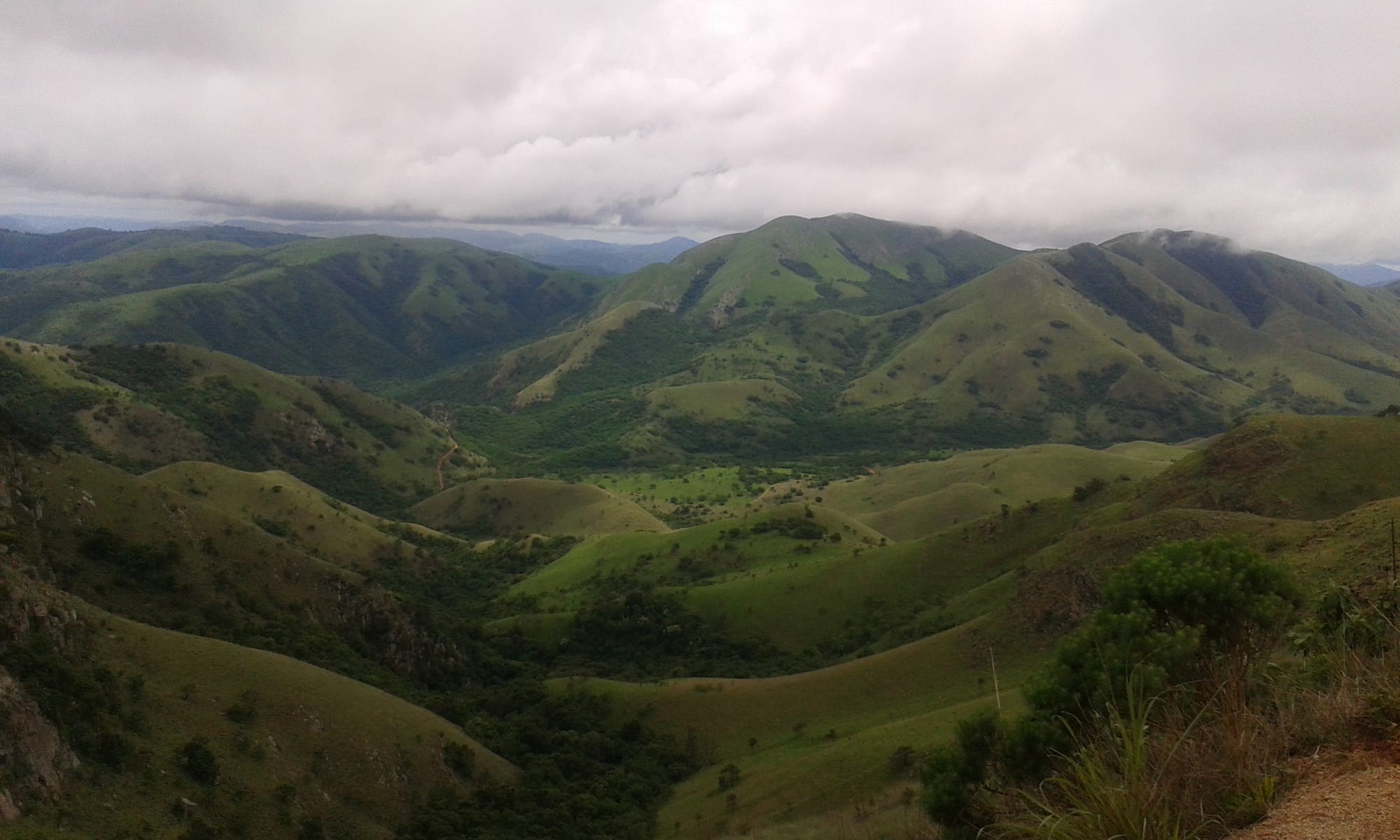
According to historical accounts, Scottish prospector Tom McLachlan discovered traces of alluvial gold in the area around Jamestown in 1881. This discovery was not immediately followed by a major rush, but it confirmed what many prospectors had long suspected, that the mountains and streams of the De Kaap Valley held gold.
In its brief existence, Jamestown became something of a depot for prospectors moving through the region. At times, as many as a hundred diggers were said to be camped there, making it one of the earliest centres of activity in what would later become the Barberton goldfields.
Life in Jamestown was harsh and uncertain. The camp stood in the hot Lowveld climate, an area then notorious for malaria and other diseases. Many prospectors who arrived with hopes of striking it rich instead fell ill, and some never left the valley alive. Contemporary descriptions referred to Jamestown as a fever-ridden place where fortune and death walked side by side.
Despite these dangers, Jamestown played a vital role in shaping the direction of further prospecting.
Among those who passed through the camp were colourful figures of the early goldfields, including the French prospector Auguste “French Bob” Roberts. It was Roberts who, after leaving Jamestown in search of better ground, made the important discovery at Concession Creek in June 1883 that finally triggered the great Barberton gold rush.
The discovery at Concession Creek proved far richer than the alluvial deposits around Jamestown. News of the strike spread rapidly, attracting prospectors from across southern Africa and beyond. Camps sprang up almost overnight along the creeks and ridges of the De Kaap Valley, and the focus of attention shifted away from Jamestown to the newly discovered reefs.
From that point on, Jamestown’s importance declined as quickly as it had risen. Prospectors abandoned their claims and moved to the richer fields, leaving behind a scattering of empty shelters and worked-out diggings. Within a short time, the camp that had once hosted a hundred hopeful diggers was reduced to little more than a memory.
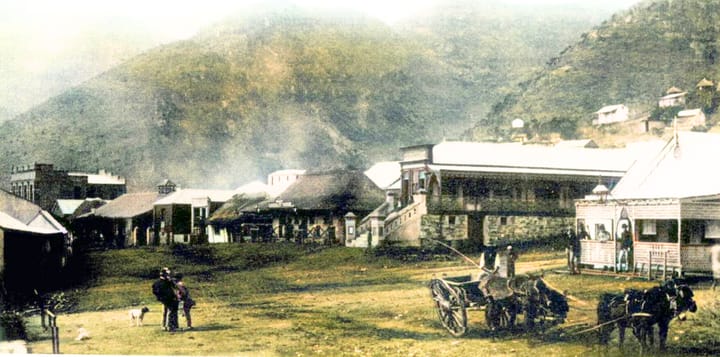
The events that followed would transform the valley forever. In 1884, after further discoveries by Graham Barber and his cousins, the government proclaimed the township of Barberton. Within months, Barberton was growing into one of the busiest gold-rush towns in southern Africa, complete with banks, hotels, newspapers and even a stock exchange.
In this rapidly developing landscape, Jamestown was overshadowed. Unlike Eureka City, which left behind visible ruins, Jamestown had been little more than a temporary camp, and so it faded from the physical landscape with very little trace. Its story survives mainly in scattered historical references and in the broader narrative of the valley’s gold discoveries.
Yet Jamestown’s significance lies precisely in this forgotten status. It represents the uncertain beginnings of the Barberton goldfields, a time before fortunes were made, before towns were surveyed, and before investors and mining companies arrived. It was the place where prospectors first tested the ground, where rumours of gold became confirmed discoveries, and where the first small community of diggers proved that the De Kaap Valley was worth the risk.
For Barberton’s present-day residents, Jamestown is a reminder that the town’s history did not begin with the proclamation of Barberton in 1884. The story started earlier, in rough camps along riverbanks where men lived in tents, washed gravel in pans and dreamed of reefs that might change their lives.
Today, the exact location of Jamestown is not widely marked, and few visitors to the valley realise that one of the earliest gold camps in the region once stood there. But without Jamestown, it is possible that the later discoveries at Concession Creek and Barber’s Reef might have taken far longer to come to light.
In that sense, Jamestown can be seen as the spark that helped ignite the gold rush that built Barberton. It was small, short-lived and largely forgotten, but its place in the history of the De Kaap Valley is secure. Every thriving gold town begins with a few prospectors and a handful of tents and in Barberton’s case, that beginning was Jamestown.

Comments ()