
From Transvaal Hotel to Greenstone Trading Post: the story of Barberton’s old Impala Hotel
Once known as the Transvaal Hotel and later the Impala Hotel, one of Barberton’s oldest buildings continues to tell its story as the Greenstone Trading Post.
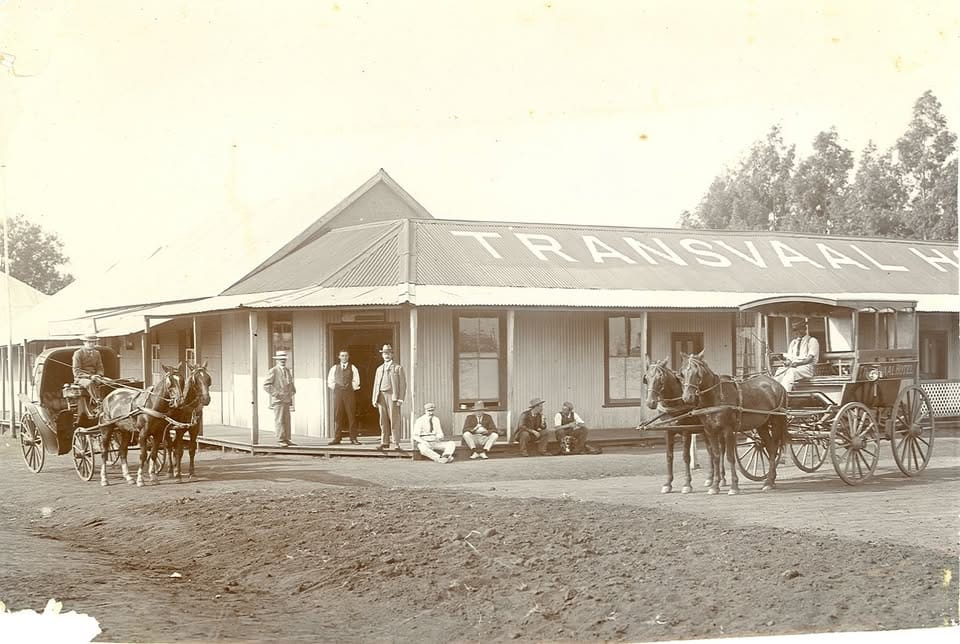
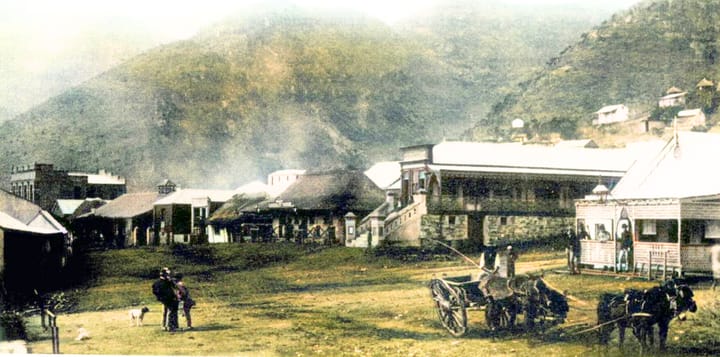
Standing quietly along Barberton’s historic streetscape is a building that has witnessed the town’s rise, decline and revival more than once. Known to many older residents as the Impala Hotel, and to an earlier generation as the Transvaal Hotel, the building today lives on as the Greenstone Trading Post, a collection of small businesses housed within walls steeped in gold‑rush history.
Barberton’s story began in the mid‑1880s when gold was discovered in the De Kaap Valley, triggering one of South Africa’s earliest gold rushes. Almost overnight, the dusty settlement grew into a bustling mining town, complete with hotels, saloons and boarding houses catering for miners, prospectors, traders and officials.
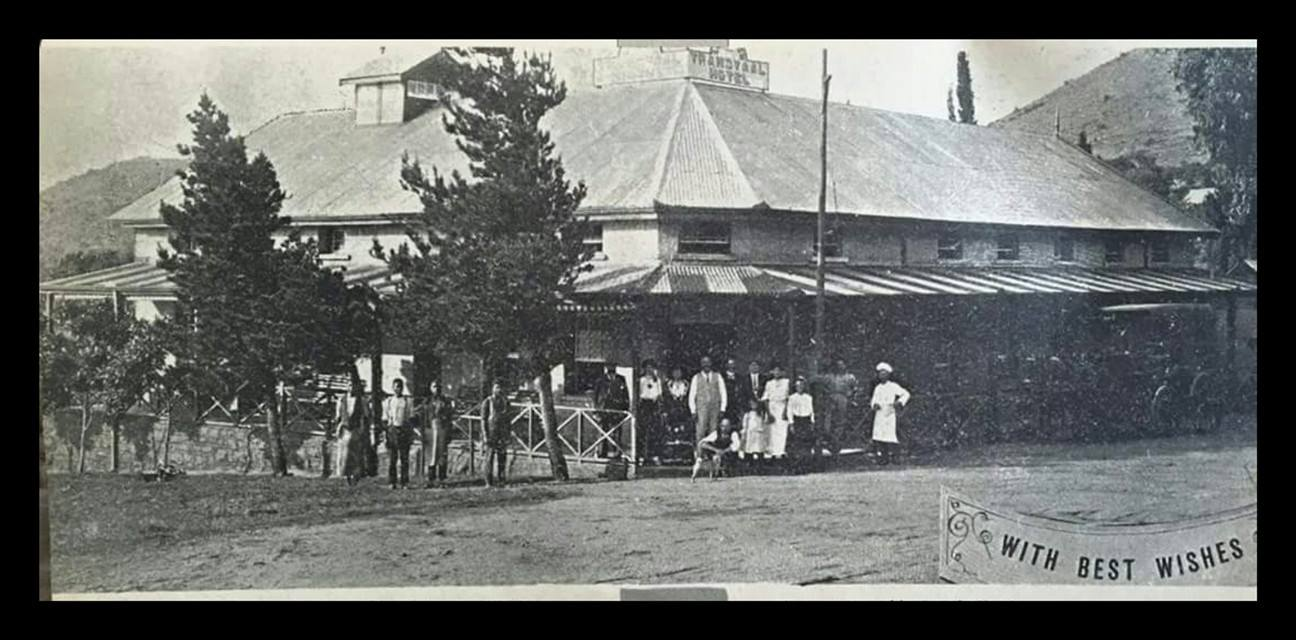
It was during this formative period that the Transvaal Hotel was established. Like many hotels of the time, it was far more than just a place to sleep, it served as a social hub where deals were struck, news exchanged and the rhythms of frontier life played out.
The road in front of the hotel, which is today known as De Villiers Street, ended where the hotel stood as Rimer’s Creek flowed right next to it and there was no bridge yet to cross over. Rumour, or maybe it was just a tale retold over the years, has it that a popular event that took place in front of the hotel was rat races. (As a journalist that often sees words as pictures in my mind I can just imagine what havoc this must have caused.)
Historical accounts suggest that during the Anglo‑Boer War (1899–1902) the building was also used as an officers’ mess.
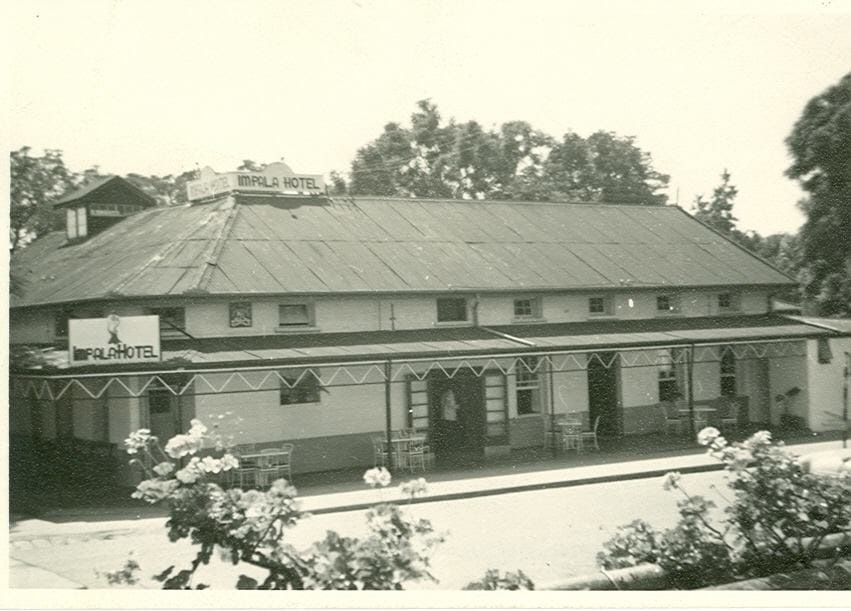
The original structure was built from wood and sink and at some stage burnt down. It was then rebuilt on the original foundation with bricks.
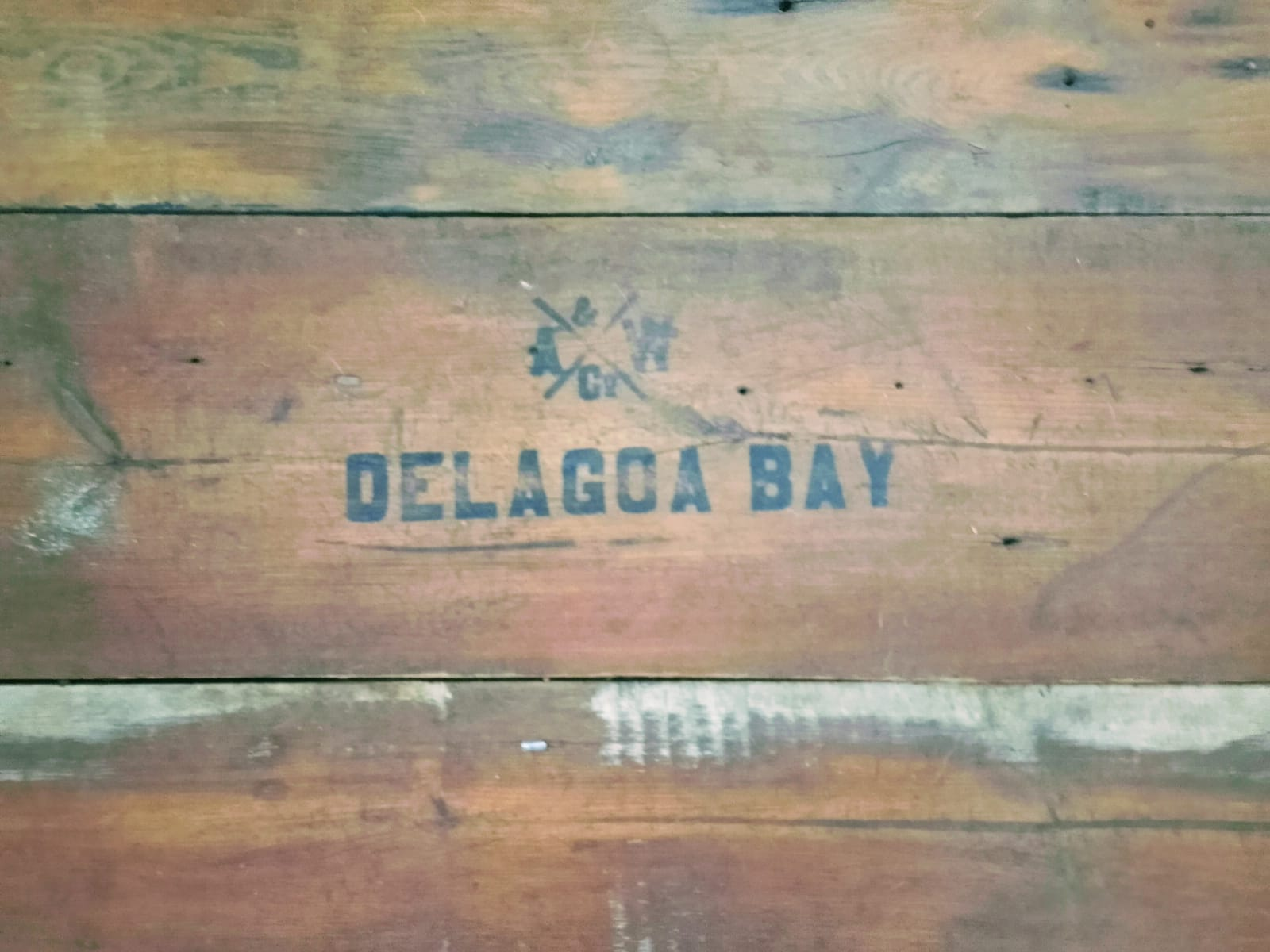
As Barberton evolved, so did the hotel. Over time, the Transvaal Hotel became known as the Impala Hotel, a name that remains familiar to many locals today. The building continued to play a role in the town’s social life through successive decades.
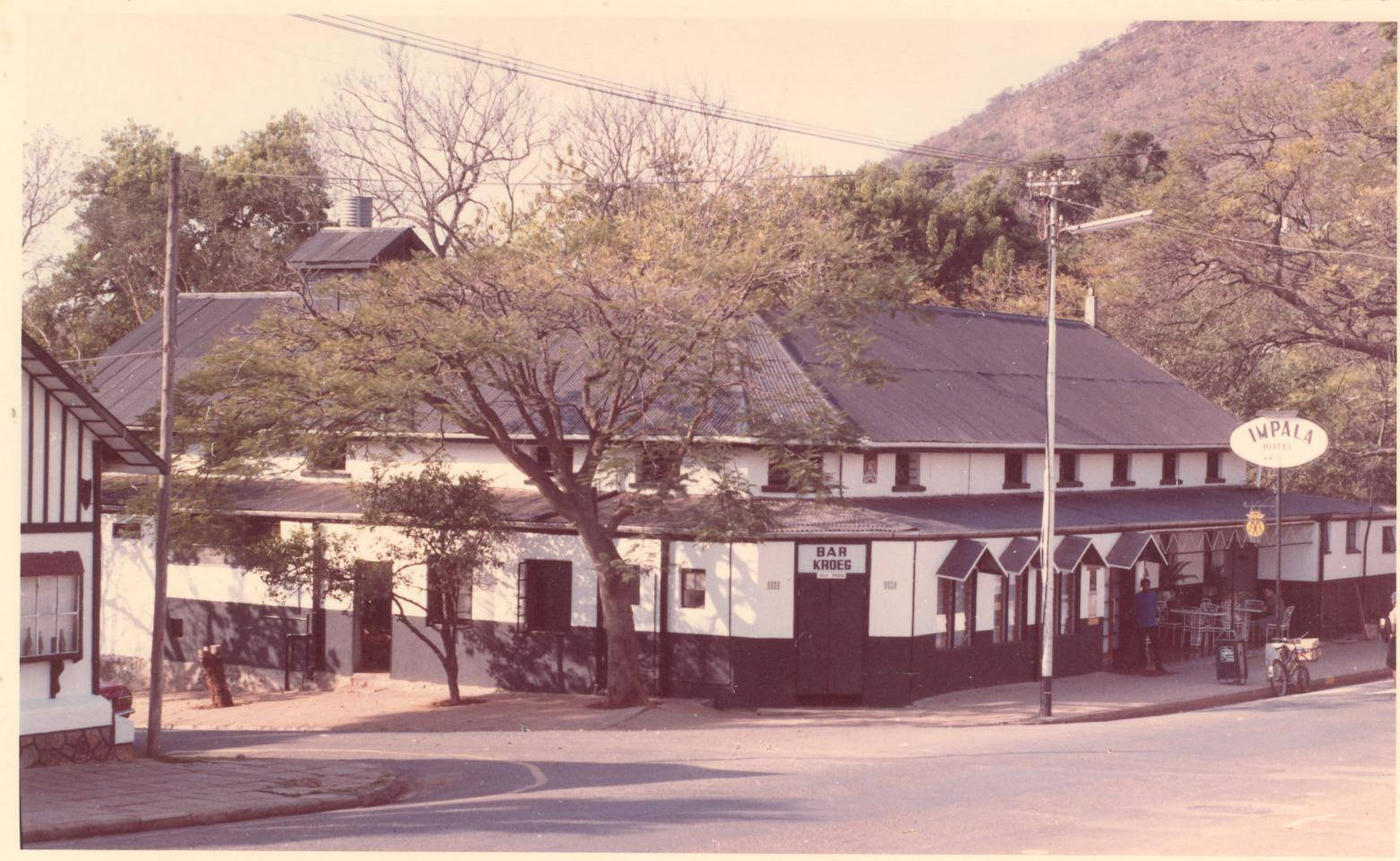
The old premises of the Transvaal Hotel hosted the dining hall and kitchen while the owners now bought the plot across the road and extended the hotel with rooms for residents.
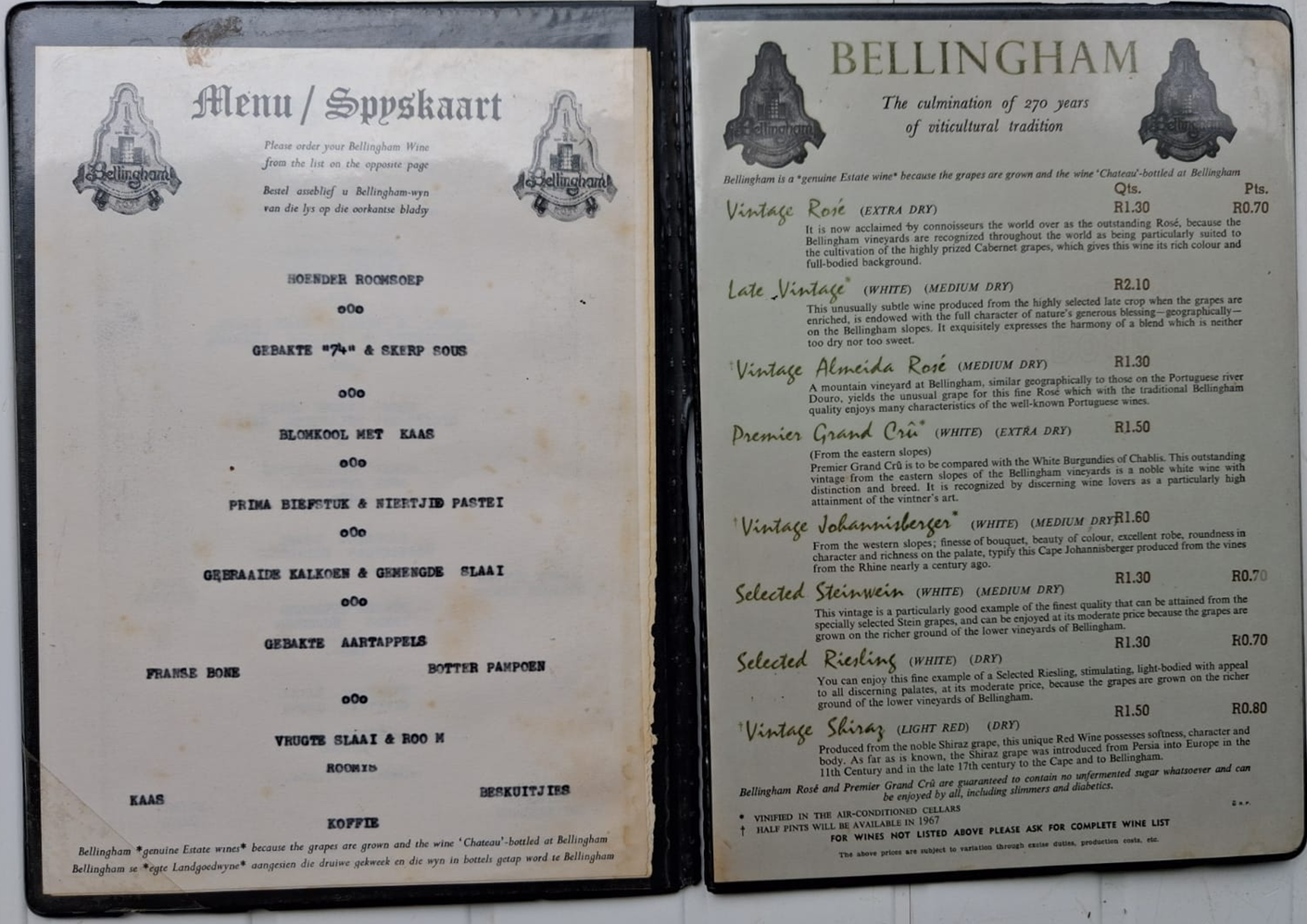
During the 1960s a very popular restaurant was also housed in one section of the Impala Hotel, Bellingham Grill. According to the present owners this was a very popular restaurant and people came from all over the area to dine here.
One of the most remarkable features of the old Impala Hotel lies on its interior walls, murals by Conrad Frederick Genal, a German‑born travelling artist known for painting wildlife and hunting scenes in hotels across southern Africa.
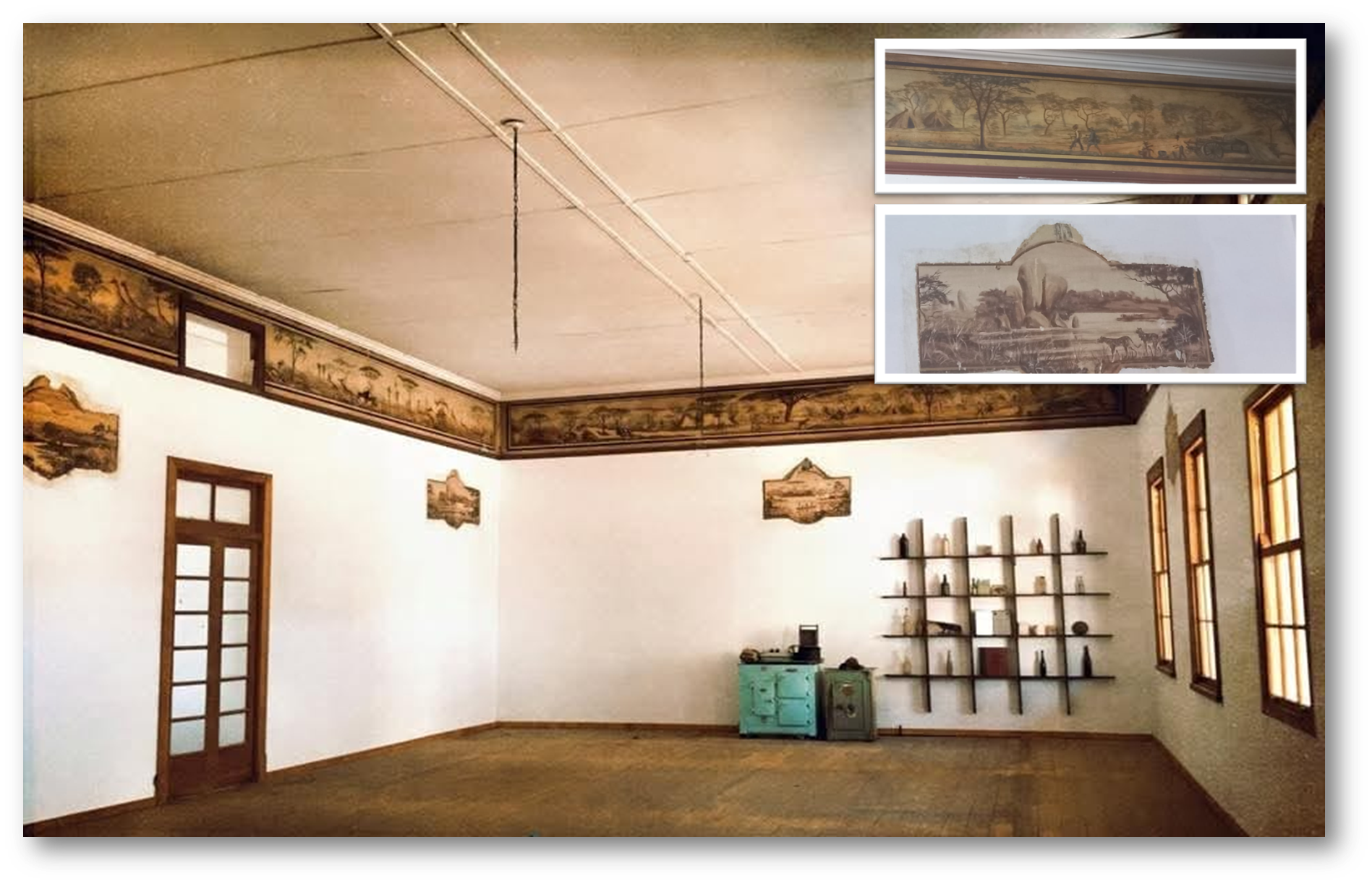
According to one of the present owners, Elsabé Reyneke, her husband Lawrence spent hours trying to get the paint that was painted over the murals removed to restore it to its former glory. The top murals against the sealing was always there but it was the smaller one's on the walls that was difficult and a huge effort to restore.
A sad part of the hotels history is that it closed its doors due to reasons not known and for many years it was deteriorating and stripped from everything that could be used.
Prince Dumisa Dlamini from Swaziland undertook a hotel-buying spree in Mpumalanga in 1993, during which he acquired several properties, a portfolio that included the dilapidated Impala Hotel in Barberton and other country hotels, reportedly spending about R20 million on these acquisitions at that time.
Unfortunately, he did nothing to restore the hotel to its former glory and many of these properties encountered financial trouble. The Impala was sold at an auction in 2001 after debts accrued, and several others closed in 1997 due to unpaid services bills.
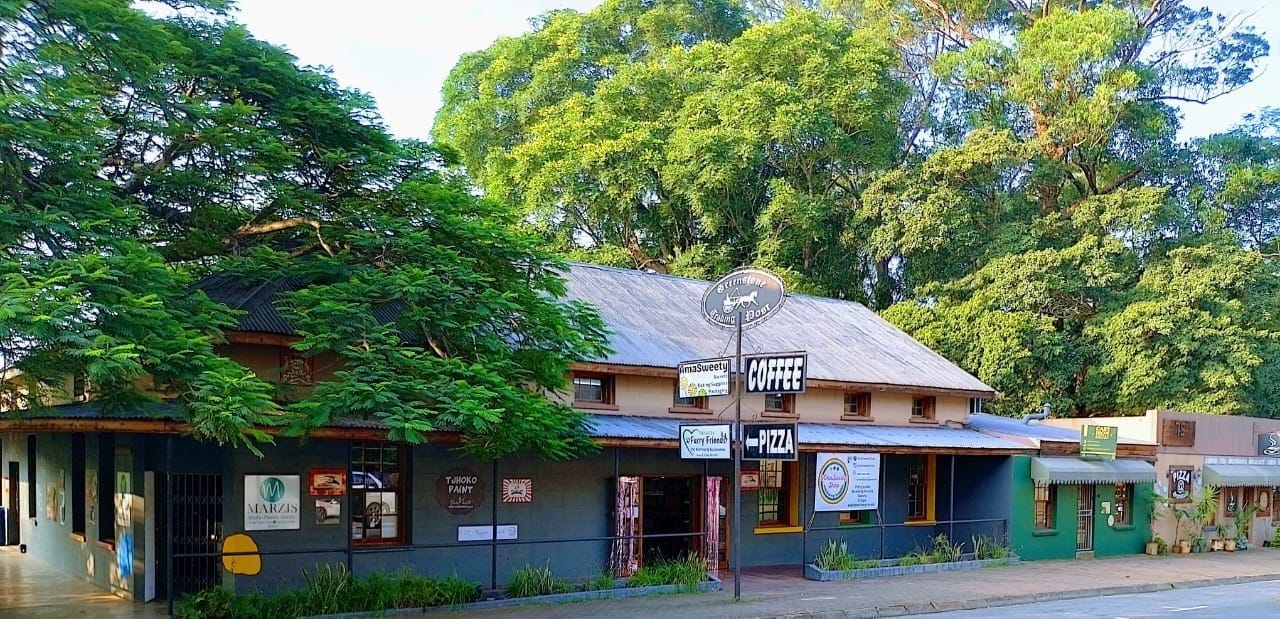
The new owner planned to renovate the hotel and open it again but circumstances prevented him from completing the project and he eventually sold it to Lawrence and Elsabé Reyneke in 2011. Elsabé said that the hotel was in a bad way. “We had to break down walls, and tried to rebuild the building according to what it looked like on the outside when it was still known as the Transvaal Hotel. This was a daunting task that took three years,” she said.
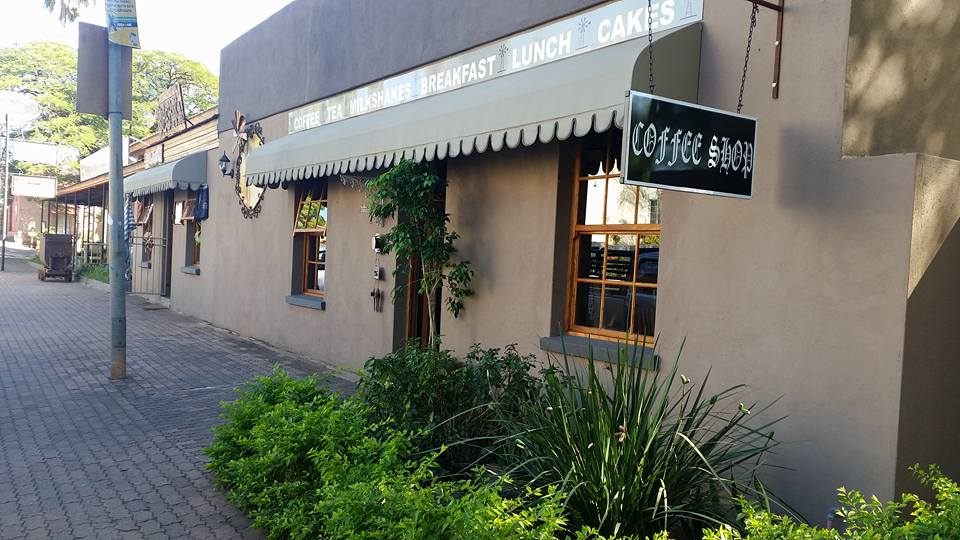
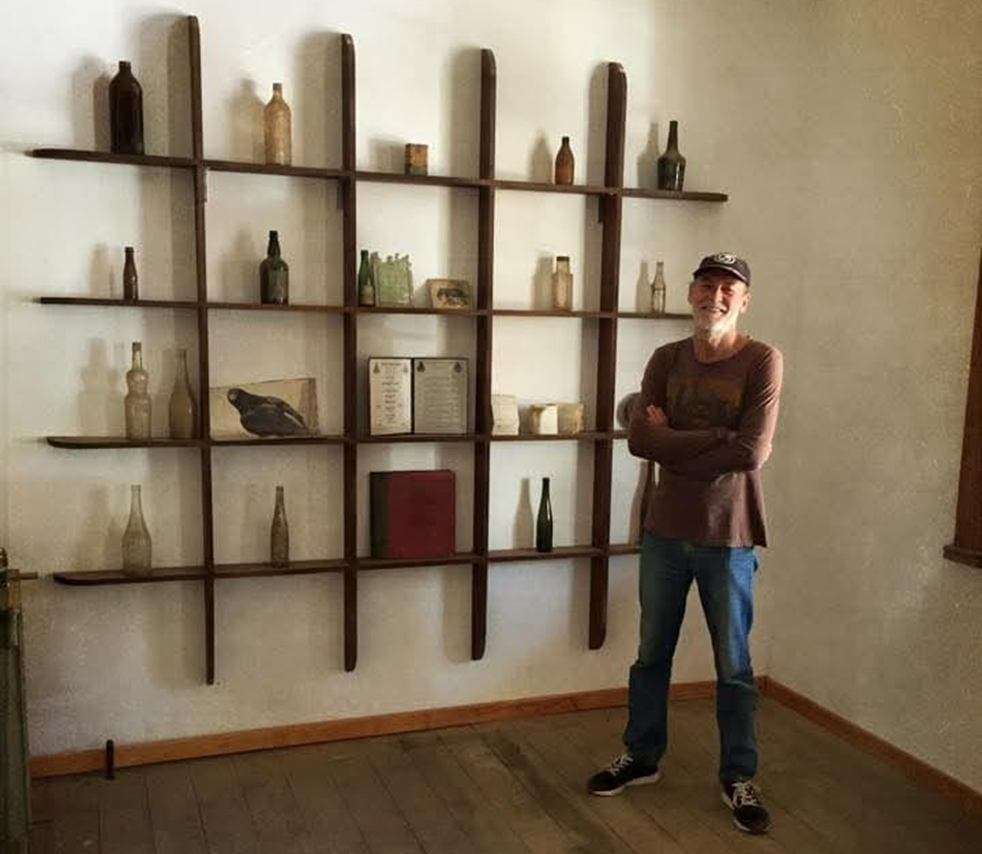
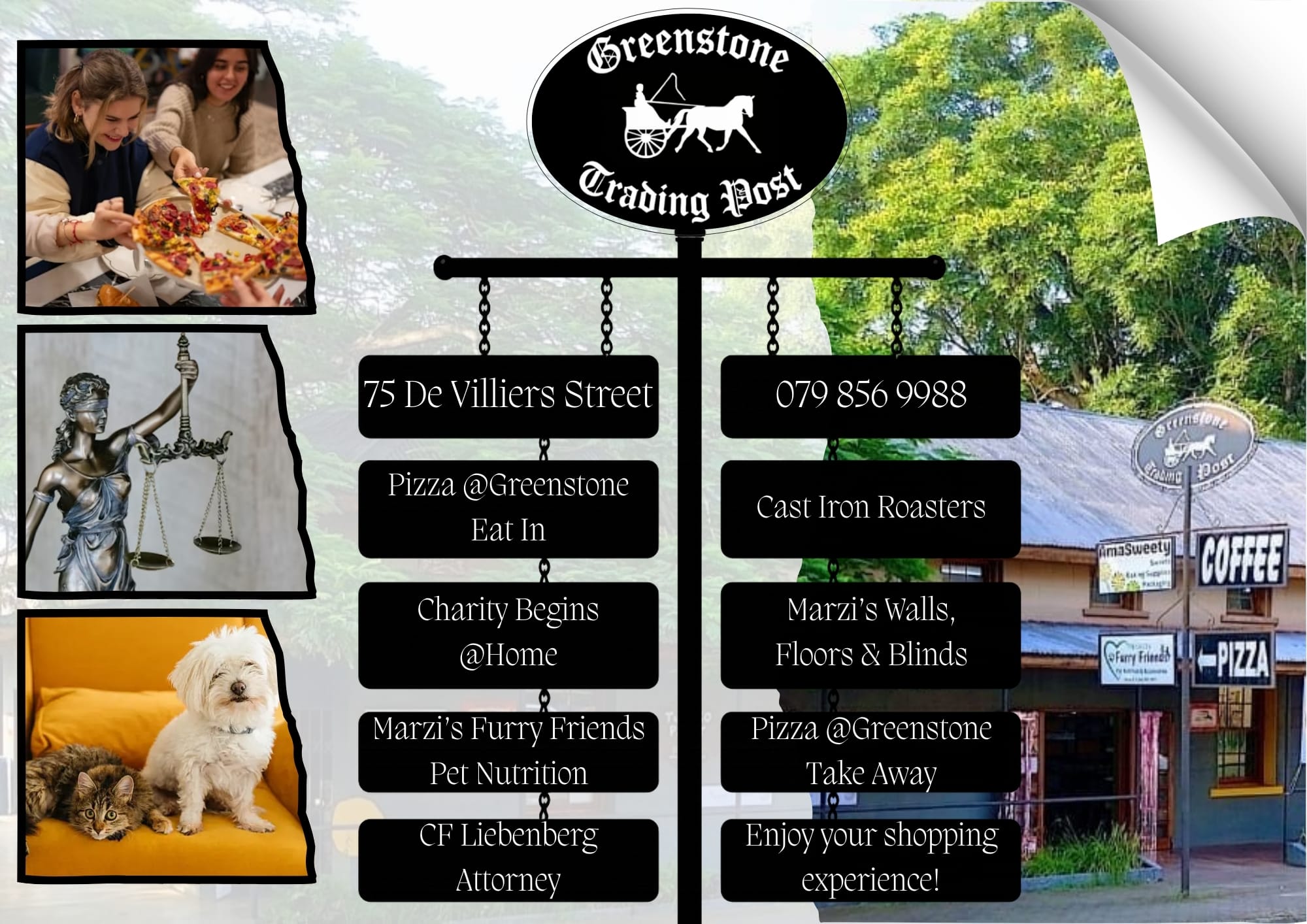
Today the building continues its story as the Greenstone Trading Post since its opening in 2014. Under the ownership of the Reyneke’s, care has been taken to restore and preserve the building’s historic features, including the rare Genal murals. It now houses a number of small businesses and shops, so be sure to pay them a visit next time you are in town!
🔴 You might also like to read:
 Lynette Spencer
 Lynette Spencer
Comments ()